
Quick Facts
- Primary Contact: Research shows that 40-50% of mental health concerns are managed effectively by primary care physicians rather than specialists alone.
- Early Intervention: There is often a significant gap in seeking help; an average of 11 years passes between symptom onset and treatment.
- Patient Desire: Approximately 70% of American adults want their healthcare provider to ask about both their physical and mental health concerns during routine visits.
- Standardized Care: Most providers use specific tools like the PHQ-9 screening for depression and the GAD-7 questionnaire for anxiety to guide the conversation.
- Primary Treatment Setting: Data shows that two-thirds of patients with depression receive their initial and primary treatment within a primary care setting.
To prepare for a mental health conversation with your primary care physician, track your symptoms, including their frequency and intensity, using a journal or app. Prepare a brief history of your mental health and a list of specific questions or concerns. Bringing a trusted friend or family member for support can also provide comfort and help you remember details during the appointment. When discussing mental health, be specific about how your symptoms impact your daily life and relationships, covering both emotional changes and physical manifestations like sleep disturbances or fatigue.
Start your journey toward wellness by discussing mental health with your primary care provider. This guide helps with mental health appointment preparation to ensure you get the care you need. Taking this first step can feel overwhelming, but remember that your doctor is there to support your whole self—not just your physical body. By preparing ahead of time, you can turn a nervous conversation into a productive roadmap for your emotional well-being.

Mental Health Appointment Preparation: Your First Step to Wellness
The minutes before a doctor’s visit often feel rushed, but successful mental health appointment preparation starts days before you enter the clinic. When we are struggling with anxiety or low mood, our memory can sometimes fail us under the bright lights of an exam room. This is why externalizing your experience through symptom tracking is so powerful. By writing down when you feel most overwhelmed or noting changes in your appetite, you provide your doctor with a data-driven map of your internal world.
Consider using a dedicated app or a simple paper journal to log your daily fluctuations. Note the intensity of your feelings on a scale of one to ten and identify any triggers that seem to worsen your state. This preparation moves the conversation from vague feelings to actionable insights. Additionally, gathering a brief history of any past mental health challenges or family history of similar issues helps your doctor see the bigger picture.
One of the most effective strategies for navigating these visits is bringing a support person to mental health appointments. Whether it is a spouse, a sibling, or a close friend, having someone by your side can provide a sense of safety. They can help describe psychological symptoms to provider from an outside perspective, perhaps noticing changes in your behavior that you might have missed. They also act as a second set of ears to help you remember the doctor's recommendations once the appointment is over.
Finally, remember that medical confidentiality is a cornerstone of your relationship with your doctor. What you share about your mental health is protected information. Understanding that your privacy is a priority can help lower the barriers to being fully honest about your struggles.
Describing Psychological Symptoms to Provider: Finding the Right Words
When you are sitting on the exam table, the hardest part is often knowing how to describe psychological symptoms to primary care doctor. Many of us fall into the trap of saying "I just don't feel like myself" or "I'm stressed." While these are true, your physician needs more specific details to make an accurate assessment. We have to bridge the gap between abstract emotions and clinical observations.
A useful technique is to focus on the impact your symptoms have on your functionality. Instead of saying "I feel sad," you might say, "My persistent sadness makes it difficult to get out of bed three mornings a week, and I am no longer able to focus on my work tasks for more than ten minutes." This gives your provider a clear understanding of the severity. Talking to your doctor about anxiety and depression symptoms also requires a look at your physical health.
The mind and body are not separate entities. Often, mental health issues present as physical ailments, known as psychosomatic manifestations. If you are experiencing unexplained aches, digestive issues, or chronic fatigue, these are vital clues for your doctor.
| Category | Physical Manifestations | Emotional/Psychological Symptoms |
|---|---|---|
| Energy & Sleep | Insomnia, oversleeping, chronic fatigue | Lack of motivation, feeling "flat" |
| Body Sensation | Headaches, muscle tension, chest tightness | Constant worry, irritability, panic |
| Digestion | Appetite loss, overeating, stomach pain | Hopelessness, social withdrawal |
| Cognitive | Brain fog, memory lapses | Difficulty making decisions, racing thoughts |
When explaining physical symptoms caused by mental health issues, be sure to mention when they started and if they coincide with periods of high emotional distress. This helps your doctor determine if a physical symptom needs its own investigation or if it is part of a broader psychological pattern.
Talking to Primary Care Physician About Mental Health: Navigating the Appointment
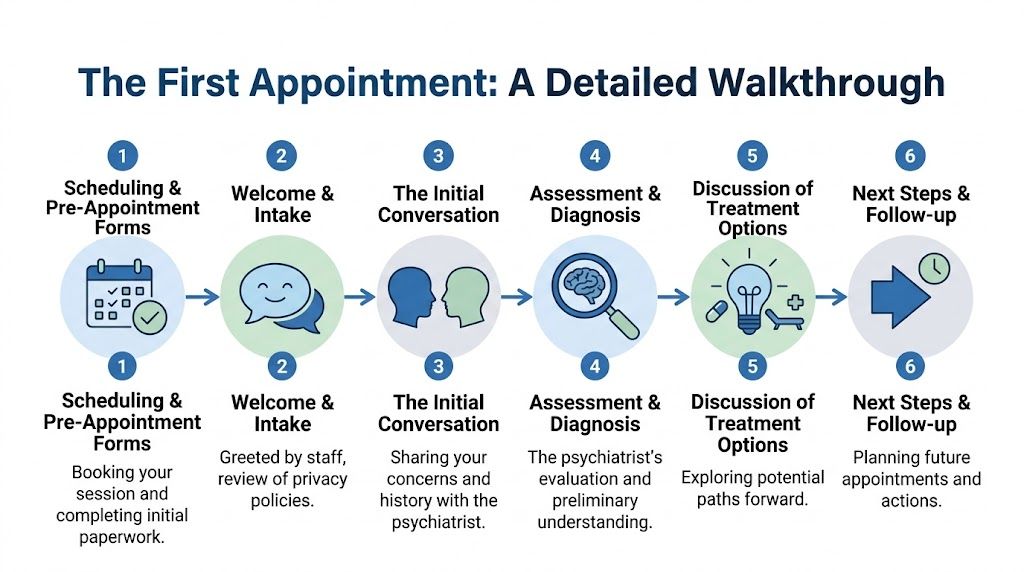
The actual dialogue during your visit is where the collaborative work begins. If you are wondering how to start a conversation about mental health with your family doctor, the best approach is often the most direct one. You might open with, "I’ve been struggling with my mental health lately and I’d like to spend some time talking about it today." Most doctors appreciate this clarity as it allows them to prioritize your concerns within the scheduled time.
During the visit, your doctor will likely use standardized screening tools. A PHQ-9 screening is a nine-question tool used to assess the severity of depression, while a GAD-7 questionnaire is used to screen for generalized anxiety disorder. Don't feel like these tests are "examining" you; they are simply ways to provide your provider with a baseline of your current state. Be as honest as possible with your answers, even if they feel uncomfortable.
As you engage in discussing mental health, try to frame the conversation around the Biopsychosocial Model. This means looking at how your biology (genetics, health), your psychology (thoughts, coping skills), and your social environment (work stress, relationships) are all interacting.
Questions to Ask Your Doctor About Mental Health Concerns:
- What are the different treatment options available for these symptoms?
- Could any of my current physical medications be affecting my mood?
- Do you recommend a referral to a behavioral health specialist?
- How long should I expect it to take before I start feeling better with this plan?
- What are the side effects of any medication management we might consider?
- Is there a specific follow-up schedule we should establish?
By asking these questions, you take an active role in your care. Your primary care physician is an expert in medicine, but you are the expert on your own life experience. Together, you can build a plan that feels sustainable and supportive.
What Happens After Discussing Mental Health with Your PCP
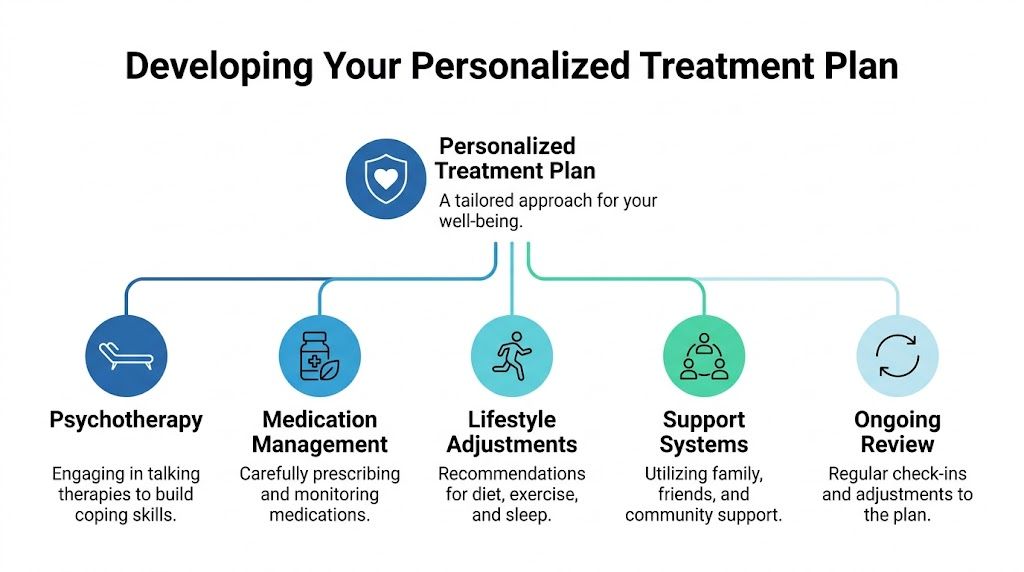
Once the initial conversation is over, you move into the action phase. What happens after discussing mental health with your PCP usually involves the development of a structured treatment plan. This plan is rarely just a single prescription; instead, it often follows a collaborative care model. This means your primary doctor may work alongside other professionals to ensure you have a "wraparound" support system.
The referral process is a common next step. Your doctor might refer you to a behavioral health specialist, such as a psychologist or a licensed counselor, for talk therapy. While your primary doctor can handle medication management, therapy provides the tools to manage the psychological and social aspects of your wellness. They might also suggest lifestyle adjustments, such as changes to your sleep hygiene or exercise routine, which are evidence-based ways to support mental health.
It is also important to discuss the logistics of your care. Ensure you understand how your health insurance coverage applies to behavioral services. Many plans have specific rules about which specialists you can see or how many therapy sessions are covered per year. Your doctor’s office can often provide a list of in-network providers to make the transition easier.
Recovery is not always a straight line. It may take some time to find the right balance of therapy, lifestyle changes, or medication. Stay in close contact with your provider and be honest about what is working and what isn't. The most important thing is that you have started the process. By bringing your mental health into the light of your primary care visit, you have significantly reduced the time it takes to get back to the life you want to lead.
FAQ
How do you start a conversation about mental health?
The most effective way to start is by being direct at the beginning of your appointment. You can simply state that you have been experiencing some emotional or mental health challenges and would like to make them a priority for today’s visit. Mentioning specific symptoms, like changes in sleep or persistent worry, helps give the doctor a clear starting point.
How do you bring up mental health to a doctor for the first time?
If it is your first time bringing it up, you might say, "I’ve noticed some changes in my mood and energy levels recently that I’m concerned about." You can also mention that you’ve been tracking these symptoms and have a list of how they are impacting your daily life. Doctors are trained to hear these concerns and will usually follow up with supportive questions or a screening tool.
Why is it important to talk about mental health?
Mental health is an integral part of your overall physical health. Untreated mental health issues can lead to chronic physical problems, strained relationships, and decreased productivity. Since primary care is where most people first seek help, talking to your doctor early can prevent symptoms from worsening and significantly shorten the time it takes to find an effective treatment.
What are common barriers to talking about mental health?
Many people feel a sense of stigma or shame, fearing they might be judged. Others worry about the cost of care or don't know the right words to describe their abstract feelings. Some also fear that their concerns won't be taken seriously. However, healthcare providers increasingly recognize mental health as a standard part of medical care, and sharing your struggles is a sign of strength and self-awareness.
What happens after discussing mental health with your PCP?
Your doctor will typically work with you to create a treatment plan, which may include a referral to a therapist, a discussion about medication, or further diagnostic tests to rule out physical causes. You will likely schedule a follow-up appointment to monitor your progress. This collaborative care model ensures that you have ongoing support as you navigate your recovery.