Quick Facts
- Difficulty: Low-effort elegant (Intermediate technique)
- Prep Time: 20 minutes active prep
- Chill Time: 1 hour dough rest + 15 minutes pre-bake freeze
- Bake Time: 40-55 minutes at 375°F
- Key Ingredients: Firm Fuyu persimmons, grass-fed butter, pistachio kernels
- Nutrition: High in Vitamin A (55% RDI) and Dietary Fiber (6g per fruit)
To make the best persimmon galette, use firm but ripe Fuyu persimmons sliced 1/8-inch thick. Prevent a soggy bottom by spreading a simple pistachio nut paste or orange marmalade over the flaky pastry dough before layering the fruit. This winter fruit galette offers a sophisticated balance of seasonal flavors and health-conscious ingredients.
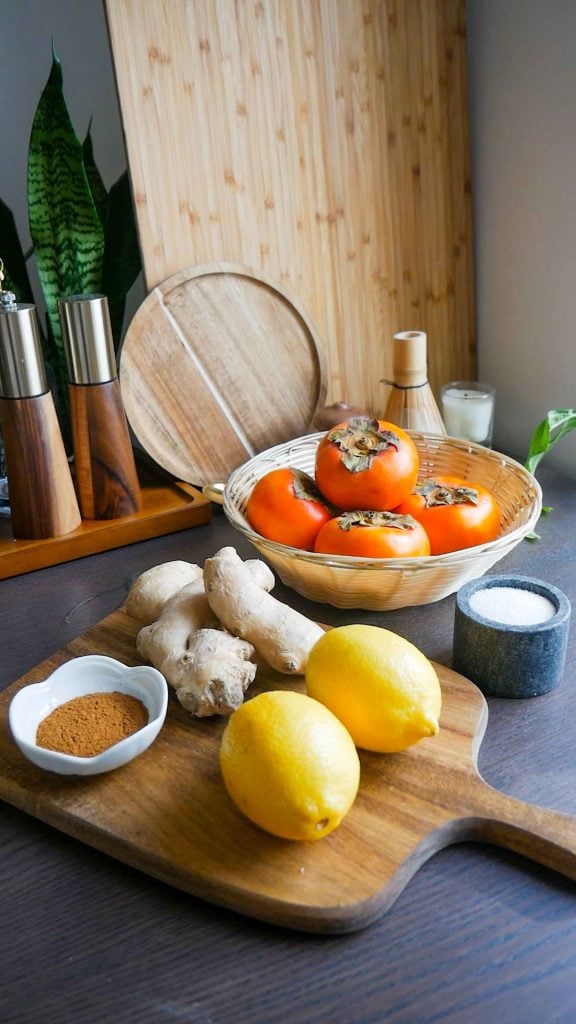
As we move into the heart of the late autumn harvest, my kitchen transitions from the bright berries of summer to the deeply hued, honey-sweet fruits of winter. Among these, the persimmon stands as a nutritional powerhouse and a culinary gem. Often overlooked in favor of apples or pears, the persimmon galette is a rustic fruit tart that highlights the fruit's unique texture and vibrant orange color. This recipe is designed to be approachable yet impressive, perfect for an easy holiday dessert using winter persimmons.
From a nutrition science perspective, incorporating these fruits into your seasonal baking is a smart move. A single Japanese persimmon weighing 168 grams provides about 55% of the recommended daily intake of vitamin A and contains approximately 6 grams of dietary fiber. When paired with the healthy fats and protein found in pistachios, you create a dessert that is as nourishing as it is delicious.
Persimmon 101: Selecting and Preparing Your Fruit
The most critical step in ensuring success with any fuyu persimmon recipes is understanding the fruit itself. Persimmons generally fall into two categories: astringent and non-astringent. Using the wrong variety can lead to a mouth-puckering experience that no amount of sugar can fix. For a galette, where we want the fruit to hold its shape while becoming tender, the Fuyu variety is your best friend.
| Feature | Fuyu Persimmon | Hachiya Persimmon |
|---|---|---|
| Shape | Squat and round, resembling a tomato | Elongated and acorn-shaped |
| Ripeness | Edible while firm | Must be jelly-soft to be edible |
| Texture | Crisp like an apple, softening as it ripens | Gelatinous and smooth pulp |
| Best Use | Slicing for tarts, salads, and fresh eating | Baking into breads, puddings, or jams |
When you are at the market, look for Fuyu persimmons that feel heavy for their size and have smooth, glossy skin. They should be firm to the touch, much like a ripe pear. If you happen to have Hachiya persimmons on hand, you can still use them, but the technique changes. Instead of slicing, you would scoop out the soft flesh and discard the peel, perhaps using it as a supplemental sweetener or a base layer, though Fuyu slices are preferred for the structural integrity of a fruit layering design.
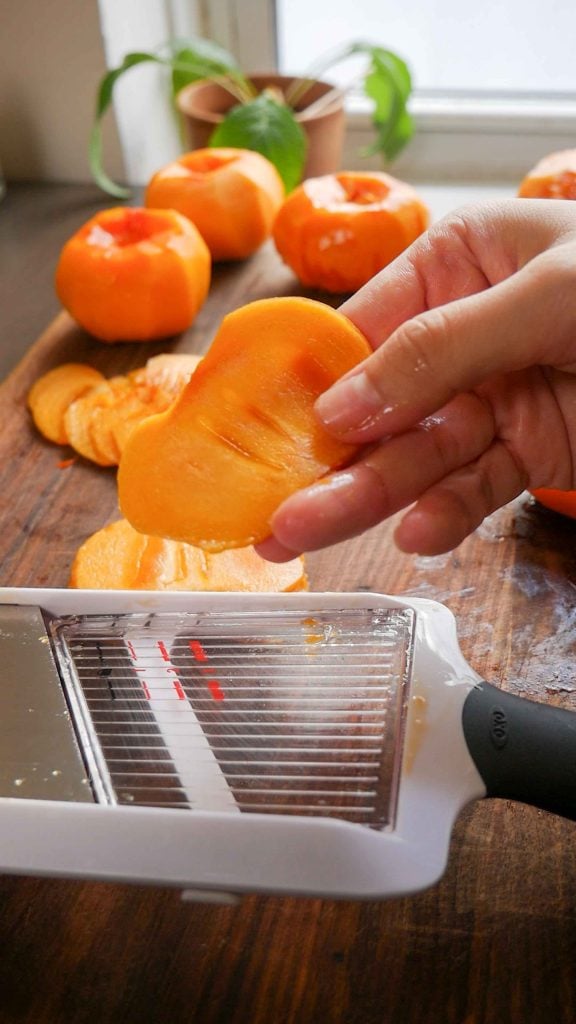
To prepare the fruit, start by removing the green calyx (the leafy top). There is no need to peel Fuyu persimmons; the skin is thin and becomes perfectly tender when baked. When considering how to slice persimmons for a tart, aim for consistent 1/8 to 3/8 inch thickness. This ensures that every slice cooks at the same rate, reaching that ideal point where the natural sugars caramelize without the fruit turning to mush.
Crafting the Flaky Pastry Dough (Traditional & GF Options)
The foundation of a great rustic fruit tart is a pastry that is both tender and sturdy. I always recommend using grass-fed butter for its higher fat content and superior flavor profile compared to standard butter. The goal is to create a flaky pastry dough by maintaining visible chunks of butter throughout the mixing process.
To achieve this, work with ice-cold, cubed butter. Incorporate it into your flour mixture until it resembles coarse crumbs with some pea-sized pieces remaining. These small bits of fat will steam in the oven, creating the airy pockets that define a high-quality crust. I like to add a teaspoon of vanilla paste to the dry ingredients to infuse the dough with a subtle, aromatic warmth.
For those seeking a gluten free galette crust with brown rice flour, the science of binding becomes paramount. Gluten-free flours lack the elastic protein structure of wheat, so we use a blend to mimic it.
Gluten-Free Flour Blend:
- 1 cup brown rice flour (for structure and a nutty flavor)
- 1/2 cup tapioca starch (for chew and browning)
- 1/2 cup almond flour (for moisture and tenderness)
- 1 teaspoon xanthan gum (if not already in your flour)
When making galette dough with apple cider vinegar, you are essentially providing an insurance policy for tenderness. The acid inhibits the development of tough gluten strands (in wheat versions) and helps the dough stay shaggy and manageable. Once your dough is formed, wrap it tightly and let it chill in the refrigerator for at least one hour. This rest period allows the flour to fully hydrate and the butter to firm back up, which is essential for rolling it out without sticking.
The Pistachio Barrier: Assembling the Filling
One common frustration in seasonal baking is the "soggy bottom"—a crust that has absorbed too much fruit juice and lost its crunch. My professional secret for a persimmon galette is creating a simple pistachio nut paste to act as a moisture barrier.
Pistachios are not only flavorful but also highly nutritious. A one-ounce serving of pistachios, which consists of approximately 49 kernels, provides 5.7 grams of protein and more potassium than half of a medium banana. By grinding these nuts into a fine meal and mixing them with a little honey or maple syrup, you create a delicious layer that protects the crust.
To assemble the filling:
- Roll out your chilled dough on a piece of parchment paper until it is roughly 12 inches in diameter.
- Spread a thin layer of orange marmalade over the center, leaving a 2-inch border.
- Sprinkle your ground pistachio nut paste over the marmalade.
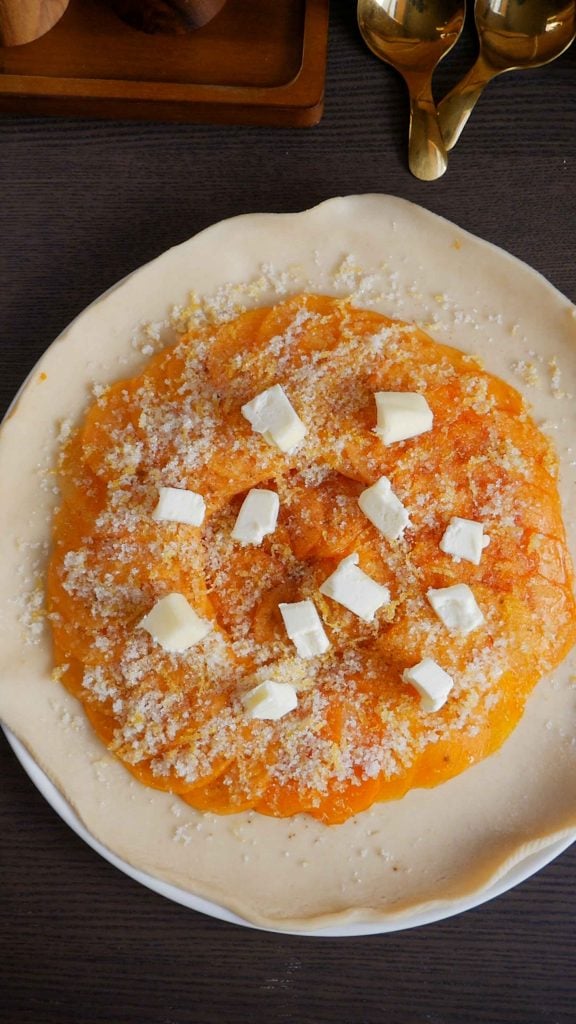
- In a bowl, gently toss your persimmon slices with a little cornstarch, a splash of lemon juice, and a pinch of ground cardamom.
- Begin the fruit layering process by fanning the slices in concentric circles, starting from the outside and working your way in.
The combination of orange marmalade and pistachios creates a sophisticated flavor bridge between the crust and the mild, honeyed sweetness of the persimmons. It transforms a simple tart into a complex, bakery-level dessert.
Finishing Touches and the 15-Minute Freeze
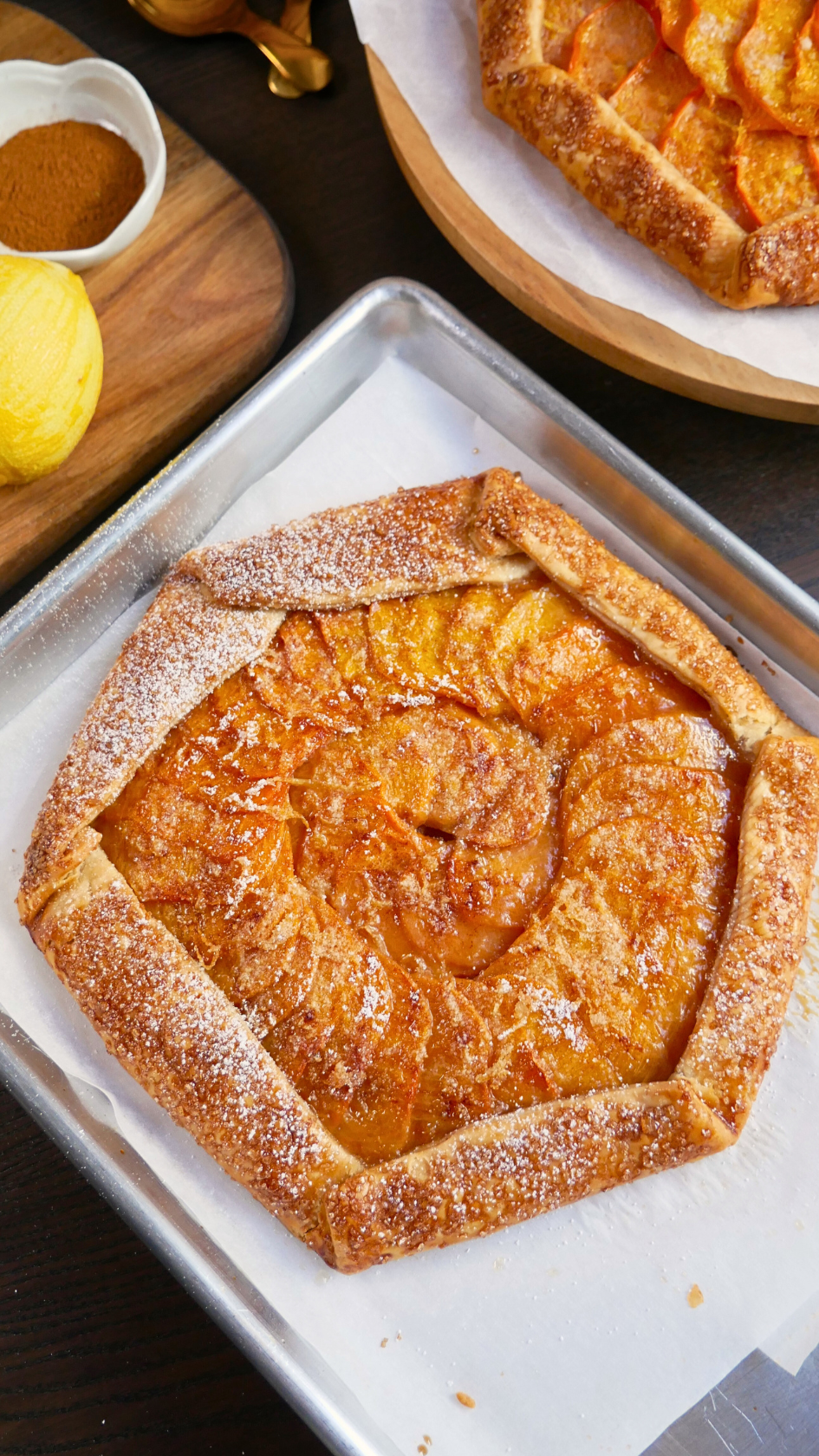
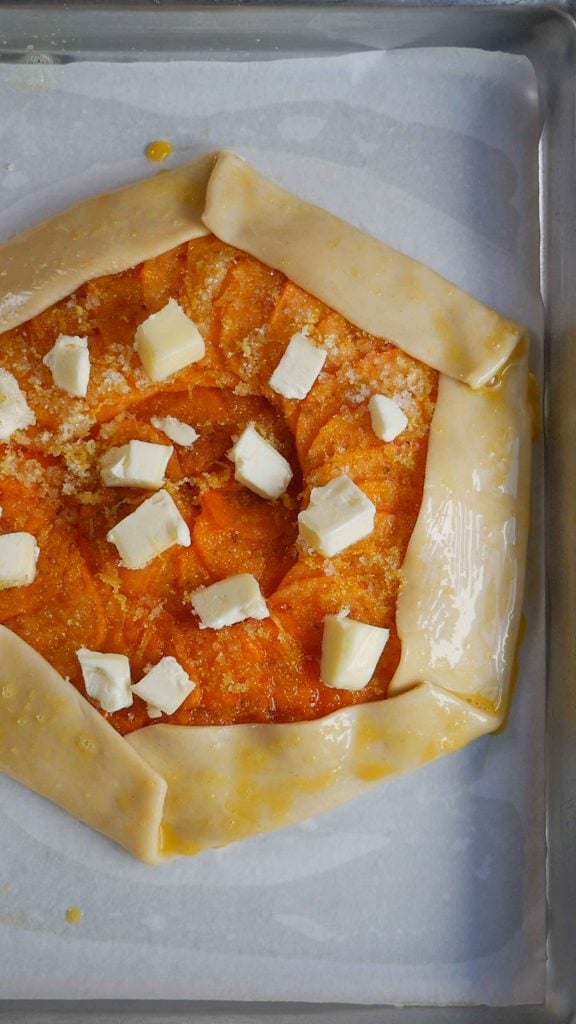
Once your fruit is beautifully arranged, it is time for the rustic crimp. Gently fold the edges of the dough over the outer edge of the persimmons, pleating it as you go. You don't need a ruler here; the charm of a galette is its imperfect, handmade appearance.
Before the galette hits the heat, we apply the finishing touches that lead to a professional golden brown crust. Use a simple egg wash—one egg beaten with a tablespoon of water—and brush it generously over the folded pastry edges. For an extra textural element, I love adding a heavy sprinkle of turbinado sugar. These large sugar crystals don't melt away in the oven, providing a delightful crunch that contrasts with the soft fruit.
Pro-Tip: The 15-Minute Freeze To ensure your galette keeps its shape and the butter doesn't leak out prematurely, place the fully assembled (but unbaked) galette in the freezer for 15 minutes. This "shocks" the fat, ensuring the flakiest possible results once it enters the 375°F oven.
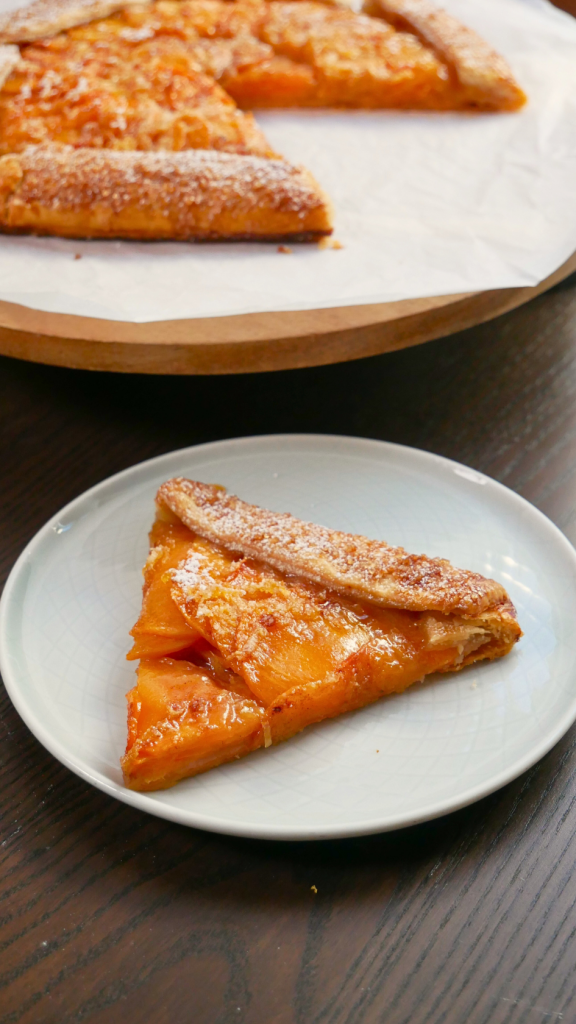
Bake the galette for 40 to 55 minutes. You are looking for a deep, golden brown crust and fruit that has softened and begun to slightly caramelize at the edges. The aroma of vanilla paste and toasted nuts will fill your kitchen, a true hallmark of winter baking.
Allow the galette to cool on the baking sheet for at least 15 minutes before slicing. This allows the juices to set, making it much easier to serve. Whether you enjoy it plain, with a dollop of Greek yogurt, or a small scoop of vanilla bean ice cream, this dessert is a testament to how simple ingredients, when treated with technical precision, can create something truly extraordinary.
FAQ
Which variety of persimmon is best for a galette?
The Fuyu persimmon is undoubtedly the best choice for a galette. Because they remain firm when ripe, they hold their shape during the baking process and offer a pleasant, crisp-tender texture. Avoid using Hachiya persimmons for slicing, as they are too soft and astringent unless completely gelatinous.
Do you have to peel persimmons before baking them?
No, you do not have to peel Fuyu persimmons. The skin is quite thin and edible. When baked, it softens significantly and becomes almost indistinguishable from the flesh. Leaving the skin on also helps the slices maintain their beautiful orange color and structural integrity.
How do you tell if a persimmon is ripe enough for a galette?
A Fuyu persimmon is ready for baking when it is deep orange and feels firm but has a slight give when pressed, similar to the ripeness of an avocado or a pear. If it is as hard as a rock, it may lack sweetness; if it is squishy, it is overripe for slicing and better suited for a puree.
How do you prevent the galette crust from getting soggy?
To prevent a soggy bottom, use a barrier layer between the crust and the fruit. A thin spread of pistachio nut paste or a dusting of ground nuts mixed with a little flour or cornstarch works beautifully. Additionally, the 15-minute freeze before baking helps the bottom crust set quickly in the oven.
Can you freeze a persimmon galette after it is baked?
Yes, you can freeze a baked persimmon galette. Allow it to cool completely, then wrap it tightly in plastic wrap and aluminum foil. It will stay fresh for up to two months. To reheat, place the frozen galette in a 350°F oven for 15-20 minutes until the crust crisps up again.