Quick Facts
- Reversibility: Early stages like fatty liver are 100% reversible; advanced cirrhosis is generally considered permanent.
- Regeneration Capacity: The liver is the only organ capable of regrowing to its full size from as little as 25% healthy tissue.
- Recovery Window: Alcoholic fatty liver disease typically resolves within 2 to 6 weeks of total abstinence from alcohol.
- First Signs of Healing: Liver enzymes such as AST and ALT often begin to normalize within 7 to 14 days of cessation.
- Disease Prevalence: While 90% to 100% of heavy drinkers develop fatty liver disease, research suggests only 10% to 20% will progress to cirrhosis.
- Survival Impact: Patients with cirrhosis who continue drinking have a five-year survival rate of less than 50%.
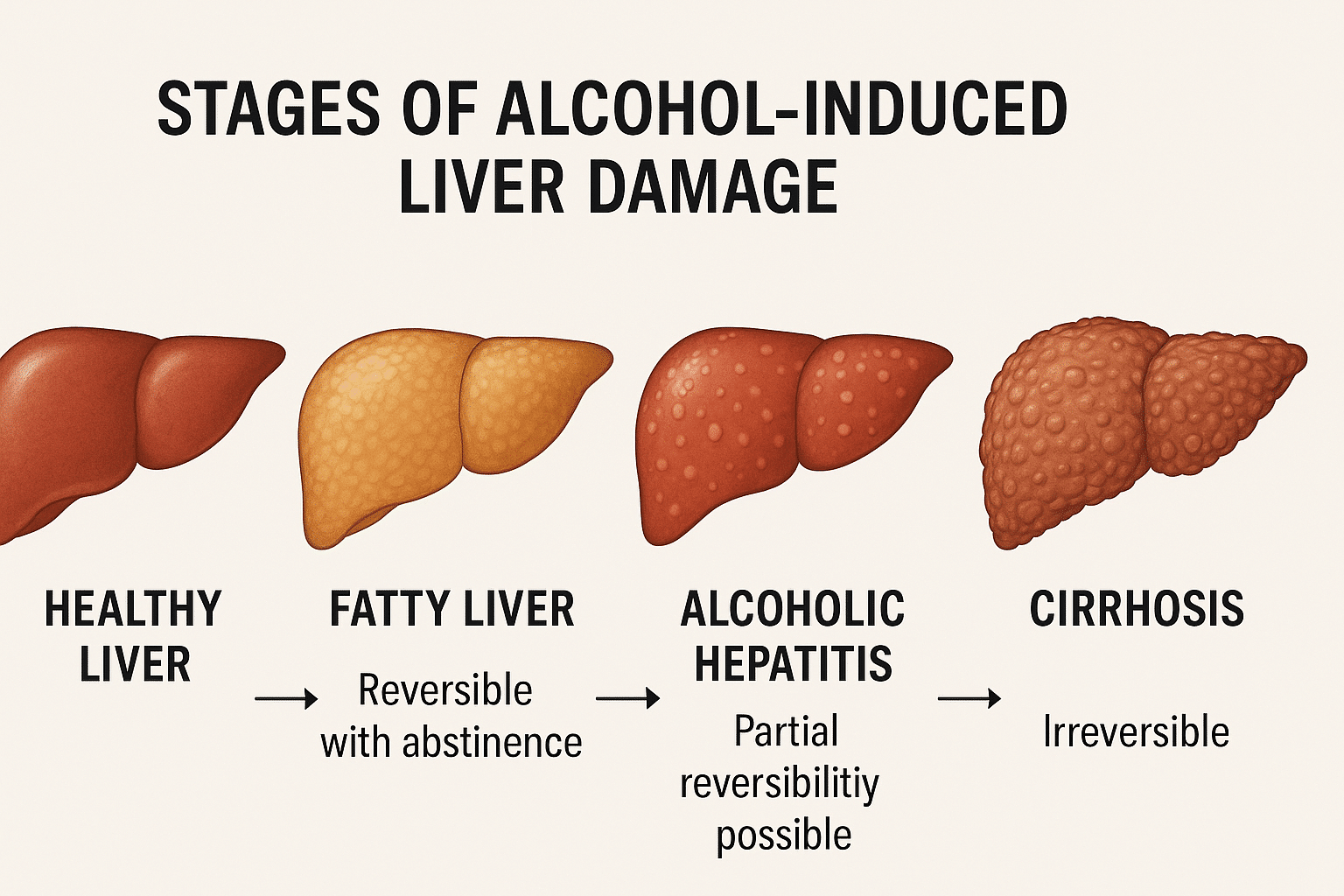
Alcoholic liver disease is not always permanent; early-stage damage like steatosis is often fully reversible with total abstinence, while cirrhosis involves permanent structural scarring that requires long-term clinical management to stabilize remaining liver function. Whether your condition is reversible depends largely on which of the stages of alcohol-related liver disease you are currently in and your commitment to immediate lifestyle changes.
The Three Stages of Alcohol-Related Liver Disease
To understand if damage can be undone, we must look at the biological progression of the disease. The liver is a resilient powerhouse, but chronic alcohol consumption triggers a predictable cascade of deterioration.
Stage 1: Alcoholic Fatty Liver (Steatosis)
Steatosis progression begins when the liver prioritizes breaking down alcohol over processing fats. This leads to a buildup of vacuoles of fat within liver cells. It is the most common and earliest stage of alcoholic liver disease. At this point, there are often no outward symptoms, though some men report a dull ache in the upper right abdomen. The good news is that alcoholic fatty liver disease is generally reversible if the individual abstains from alcohol for two to six weeks.
Stage 2: Alcoholic Hepatitis
This stage is characterized by acute hepatic inflammation. It occurs when heavy drinking causes the liver cells to swell and die. Unlike the silent nature of fatty liver, symptoms of alcoholic hepatitis are harder to ignore. Patients may experience a sudden jaundice onset (yellowing of the skin and eyes), fever, and nausea. While this stage is serious and can be life-threatening, it is still potentially reversible. Total abstinence and aggressive nutritional therapy can allow the liver to resolve inflammation and prevent the transition into permanent scarring.
Stage 3: Alcoholic Cirrhosis
Cirrhosis represents the final and most severe stage. Over years of chronic inflammation, the liver replaces healthy tissue with hard scar tissue, a process known as liver fibrosis. When the scarring becomes extensive, it is called cirrhosis. At this point, the liver loses its ability to filter toxins, produce proteins, and regulate blood clotting. While the scarring itself is typically permanent, quitting alcohol is still life-saving. It can stop the progression of the disease and prevent complications like ascites accumulation (fluid buildup in the abdomen) or liver failure.
Recovery Timeline: How Long to Heal?
One of the most frequent questions I get from readers is: how long for liver to heal after quitting alcohol? The body begins the repair process much faster than most people realize, but full functional restoration takes time.
The alcoholic fatty liver recovery timeline begins the moment you stop drinking. Within the first 24 hours, the liver finishes clearing residual ethanol from the bloodstream. Within 7 to 14 days, liver enzyme normalization after alcohol cessation typically begins as inflammation starts to subside.
| Phase | Duration | Biological Milestone |
|---|---|---|
| Initial Detox | 1 - 7 Days | Blood alcohol clearance; reduction in acute oxidative stress. |
| Enzyme Stabilization | 1 - 2 Weeks | AST and ALT levels begin to drop toward normal ranges. |
| Fat Metabolism | 2 - 6 Weeks | Excess fat deposits (steatosis) begin to clear from hepatocytes. |
| Cellular Repair | 3 - 12 Months | Significant hepatocyte regeneration occurs; inflammation resolves. |
| Long-term Stability | 1+ Years | Remaining liver function stabilizes; risk of liver cancer decreases. |
The alcohol detox timeline from heavy drinking can be physically demanding, but the biological rewards are immense. By the one-month mark, most individuals with fatty liver will see a near-complete resolution of the fat buildup, provided they have maintained total abstinence.
Signs Your Liver is Healing From Alcohol
As the liver recovers, the benefits often manifest in ways that go beyond a laboratory blood test. When your liver isn't bogged down by processing toxins, your entire metabolic system gains a second wind.
- Increased Energy Levels: As the liver restores its ability to store glucose and manage energy, the chronic fatigue associated with alcoholic liver disease begins to lift.
- Clearer Skin and Eyes: A reduction in bilirubin concentration means the yellow tint of jaundice fades, and the skin often loses the "ruddy" or "blotchy" appearance common in heavy drinkers.
- Improved Digestion: The liver resumes normal bile production, which improves the absorption of nutrients and reduces bloating.
- Mental Clarity: As the liver's filtration system improves, fewer toxins (like ammonia) reach the brain, leading to a reduction in "brain fog."
- Reduction in Oxidative Stress: This isn't something you see in the mirror, but internally, your cells are better protected against DNA damage and premature aging.
The liver has incredible compensatory power. Even if some permanent scarring exists, the remaining healthy cells can often work harder to maintain overall health once the burden of alcohol is removed.
Diagnostics and Reversing the Damage
If you are concerned about your liver health, don't guess—test. Modern medicine provides several non-invasive ways to assess your status.
Doctors primarily use liver function tests to check for elevated enzymes. A high AST to ALT ratio is often a specific marker for alcohol-related damage. To check for scarring, many clinics now use a FibroScan, which uses ultrasound technology to measure liver stiffness. This can help distinguish between simple fatty liver and more advanced liver fibrosis.
If the damage is in the early stages, reversing the damage is largely a matter of lifestyle. Beyond total abstinence, nutritional therapy is critical. Chronic alcohol use depletes B vitamins (especially thiamine) and antioxidants. Supplementing with milk thistle (silymarin), Vitamin E, and a high-protein diet can support hepatocyte regeneration and provide the building blocks the liver needs to rebuild itself.
FAQ
What are the early warning signs of alcoholic liver disease?
Early signs are often subtle and can include persistent fatigue, unexplained weight loss, and a dull ache or pressure in the upper right quadrant of the abdomen. Many men also notice a loss of appetite or occasional bouts of nausea after eating fatty meals.
Can alcoholic liver disease be reversed if you stop drinking?
Yes, in its early stages. Fatty liver and mild alcoholic hepatitis are frequently fully reversible with total abstinence. However, once the disease progresses to cirrhosis, the structural scarring is permanent, though stopping alcohol can still prevent further complications and extend life expectancy.
What are the three stages of alcoholic liver disease?
The three stages are alcoholic fatty liver (steatosis), alcoholic hepatitis (acute inflammation), and alcoholic cirrhosis (permanent scarring). Progression through these stages is usually linked to the duration and volume of alcohol consumption.
How long does it take for alcohol to damage your liver?
The timeline varies by individual and genetics. While some may develop fatty liver after just a few days of heavy binge drinking, it typically takes 10 or more years of heavy daily consumption to develop the permanent scarring associated with cirrhosis.
What are the symptoms of end-stage alcoholic liver disease?
End-stage symptoms include severe jaundice, significant ascites accumulation in the abdomen, confusion or "liver flap" (hepatic encephalopathy), and internal bleeding from swollen veins in the esophagus (varices).
What happens to your liver when you stop drinking?
Once alcohol is removed, the liver stops producing the inflammatory chemicals used to process ethanol. It begins to clear accumulated fat, normalize enzyme production, and initiate hepatocyte regeneration to replace damaged cells with healthy ones.