Quick Facts
- Survival Rate: Localized melanoma has a five-year relative survival rate of approximately 99 percent when caught early.
- Risk Factor: The risk of developing melanoma is seven times higher for individuals with more than 100 moles.
- Detection Tool: The ABCDE mole checking method is the gold standard for identifying potential melanoma warning signs.
- Most Dangerous Type: While melanoma is only 1 percent of all skin cancer cases, it causes the vast majority of skin cancer deaths.
- Top Warning Sign: Evolving—any change in size, shape, or color—is the most critical clinical indicator of a dangerous mole.
Identifying skin cancer signs early is the most critical step in successful treatment. This guide explains the ABCDE mole checking method and other warning signs to help you determine if a spot on your skin requires professional attention from a board-certified dermatologist.
The ABCDE Rule: Your Visual Guide to Identifying Risk
When it comes to preventive health, your skin is your first line of defense. Most of us have moles, and many are perfectly benign. However, learning how to use ABCDE rule for moles empowers you to distinguish between a beauty mark and a potential health risk. It is important to remember that about 70 to 80 percent of melanomas actually appear on previously normal-looking skin, rather than developing within a pre-existing mole. This means you must watch for both new spots and changes in old ones.
The ABCDE mole checking method stands for:
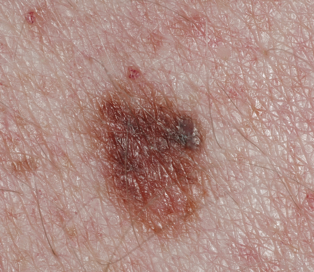
- Asymmetry: One half of the mole does not match the other half. If you were to draw a line through the middle, the two sides would look distinct in shape or texture.
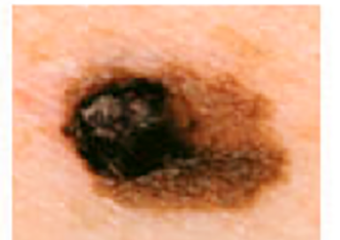
- Border: The edges of a healthy mole are typically smooth and clearly defined. If you notice melanoma warning signs, the borders may be ragged, notched, blurred, or irregular.
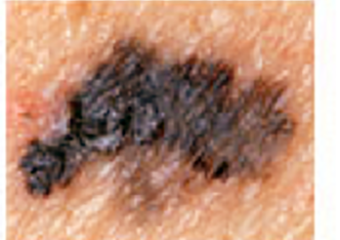
- Color: A benign mole is usually a single shade of brown. A dangerous mole might have a variety of colors, including different shades of brown, tan, or black. Sometimes, patches of red, white, or even blue can appear.
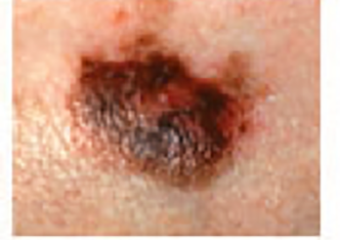
- Diameter: While melanomas can be small, they are often larger than 6mm—roughly the size of a pencil eraser. If you see a spot that is growing or is already larger than this threshold, it warrants a professional check.
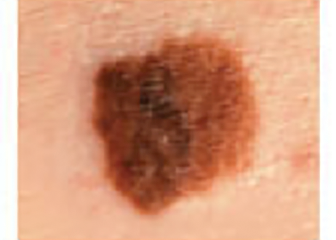
- Evolving: This is arguably the most vital factor. What does an evolving mole look like? It is any lesion that changes in size, shape, color, or elevation over time. It might also develop new symptoms, such as itching, crusting, or bleeding.
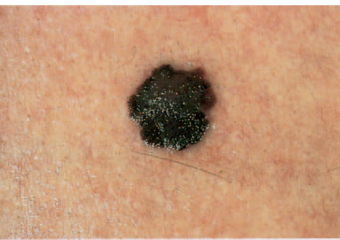
The Ugly Duckling Sign: Contextual Comparison
For those with many moles, the ABCDE rule can sometimes feel overwhelming. This is where the ugly duckling sign comes into play. Most moles on a person's body tend to look like their "siblings"—they share a similar color, shape, and size. If one mole looks significantly different from all the others, it is considered an outlier, or an ugly duckling.
When evaluating an atypical mole vs skin cancer, dermatologists look for this lack of uniformity. If you have a cluster of small, light-brown moles but one spot is dark, large, and irregular, that is the one that needs immediate attention. Given that the risk of melanoma is significantly higher for those with a high mole count, knowing how often to do skin self-exams—ideally once a month—is a non-negotiable part of a healthy lifestyle.
Beyond Melanoma: Identifying BCC and SCC
While melanoma receives the most attention due to its ability to metastasize, it is not the only form of skin cancer. Basal cell carcinoma and squamous cell carcinoma are much more common and are primarily driven by cumulative UV radiation exposure. Unlike the pigmented lesions associated with melanoma, these often present as persistent skin changes that don't heal.
Knowing the signs of basal cell carcinoma vs melanoma is helpful for early identification. Basal cell carcinoma often appears as a pearly bump or a flesh-colored, pimple-like growth that may bleed easily and then scab over. Squamous cell carcinoma, on the other hand, usually presents as a firm, red nodule or a flat, scaly red patch. Both of these types often appear on areas with high sun exposure, such as the face, neck, and hands, emphasizing the need for a daily sun protection factor (SPF) of 30 or higher.
| Skin Cancer Type | Common Appearance | Key Indicators |
|---|---|---|
| Melanoma | Pigmented mole with irregular features | ABCDE criteria, changing color or size |
| Basal Cell Carcinoma | Pearly bump, pinkish patch | Non-healing sore, "waxy" texture |
| Squamous Cell Carcinoma | Firm red nodule, scaly patch | Crusting, persistent rough skin |
Hidden Danger: Skin Cancer in Areas Not Exposed to Sun
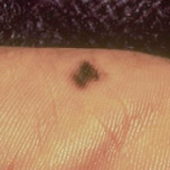
A common misconception is that skin cancer only occurs where the sun hits. However, certain types, such as Acral Lentiginous Melanoma (ALM), can develop in places that rarely see the light of day. This is particularly important for people of color, as ALM is the most common form of melanoma among Black, Hispanic, and Asian populations.
When performing your monthly check, look for skin cancer signs in areas not exposed to sun. This includes:
- The palms of your hands and the soles of your feet.
- Underneath finger and toenails (often appearing as a dark streak).
- Between your toes and in the genital area.
- Behind the ears and on the scalp.
These areas are frequently overlooked during routine self-exams, yet early detection in these locations is just as critical for a positive outcome.
When to See a Professional: From Self-Exam to Diagnosis
Self-exams are the first step, but they are not a substitute for clinical expertise. If you identify a spot that meets any of the ABCDE criteria or notice an ugly duckling, you should schedule an appointment with a board-certified dermatologist.
During your visit, the doctor may use dermoscopy, a non-invasive tool that allows them to see deep into the layers of the skin to visualize pigment cells and blood vessel patterns. If a spot looks suspicious, they will perform a skin biopsy, taking a small sample of the tissue for lab analysis.
For many, a biopsy reveals a benign atypical mole, providing peace of mind. For others, a diagnosis of skin cancer allows for immediate intervention. In 2026, medical advancements have continued to improve outcomes; for example, TIL therapy (Tumor-Infiltrating Lymphocyte therapy) has become a revolutionary option for advanced melanoma cases that were once difficult to treat. However, the goal remains prevention and early action. Annual professional screenings combined with your monthly home checks are the most effective way to ensure long-term skin health.
FAQ
What are the first signs of skin cancer?
The earliest signs often include a new spot on the skin or an existing mole that starts to change in size, shape, or color. Other early indicators include a sore that refuses to heal, a pearly bump that bleeds and scabs, or a rough, scaly patch of skin that persists for several weeks.
What is the ABCDE rule for checking moles?
The ABCDE rule is a framework used to identify potential melanoma. It stands for Asymmetry (mismatched halves), Border (irregular or blurred edges), Color (multiple colors or uneven shades), Diameter (larger than 6mm), and Evolving (any change in the spot over time).
How can you tell the difference between a mole and skin cancer?
Normal moles are generally uniform in color, round or oval, and stay the same over many years. Skin cancer tends to be irregular in shape, features multiple colors, and most importantly, it changes. While a mole is static, skin cancer is dynamic and evolving.
Where does skin cancer usually start?
Skin cancer originates in the skin's cells, specifically the melanocytes (melanoma) or the basal and squamous cells in the epidermis. While it often starts on sun-exposed areas like the face, arms, and back, it can also begin in hidden areas like the soles of the feet or under the nails.
When should I be worried about a new spot on my skin?
You should consult a professional if a new spot appears after age 30, if it looks different from all your other moles, or if it exhibits any symptoms like persistent itching, pain, or bleeding. Any spot that seems to grow or change rapidly should be evaluated by a dermatologist immediately.