Quick Facts
- Method Origin: Founded by Juliu Horvath as Yoga for Dancers, blending Eastern philosophy with modern biomechanics.
- Movement Style: Emphasizes 3-dimensional, spherical, and rhythmic patterns rather than static holds.
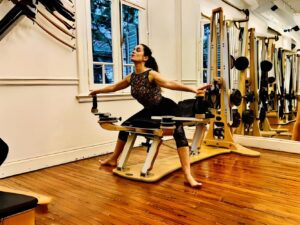
- Core Equipment: Utilizes the Pulley Tower Unit to provide constant tension and support through full ranges of motion.
- Spinal Focus: Specifically targets the seven natural directions of spinal movement to enhance agility.
- Primary Benefit: Achieves joint decompression and fascial release, reducing the risk of repetitive strain injuries.
- Research Backed: Clinical studies show significant improvements in functional gait and stride length through this method.
Gyrotonic enhances yoga practice by introducing three-dimensional, circular movements that complement yoga's linear stretches. This approach focuses on joint decompression and functional biomechanics, allowing practitioners to reach a fuller range of motion. By integrating the Pulley Tower Unit, yogis can experience weighted resistance that deepens spinal mobility and strengthens kinetic chains beyond traditional mat work.
For yoga practitioners, Gyrotonic offers unique benefits for spinal health and core stability through arch and curl sequences. These fluid transitions stimulate the nervous system and promote fascial release, which helps in mastering complex vinyasa flows. The system's emphasis on spherical motion improves proprioception, helping yogis maintain better balance and alignment during challenging standing poses or inversions.
Moving Beyond the Mat: 3D Spherical Motion
Traditional yoga, particularly styles like Hatha or Vinyasa, often operates within linear planes. We fold forward, we reach up, and we step back. While these movements are foundational for health, the human body is designed for more than just two-dimensional patterns. Gyrotonic for yoga introduces the concept of spherical motion, where the body moves in circles and spirals. This architectural shift in movement allows you to explore the space around you rather than just the space of your mat.
When you practice on a mat, gravity is your primary resistance. However, when transitioning from yoga to gyrotonic, you enter a world of three-dimensional movement that challenges your proprioception in entirely new ways. Instead of holding a static Warrior II, you might find yourself spiraling through the torso while maintaining a grounded base, mimicking the natural architecture of our connective tissue. This circularity is essential for vinyasa lovers who want to find more grace and fluidity in their transitions between asanas.
The benefits of this spherical approach extend to the nervous system. By moving in patterns that aren't strictly linear, you stimulate different neural pathways. This helps in how gyrotonic improves yoga balance and flow, as the brain becomes more adept at managing the body's position in space. It turns a workout into a form of movement meditation that feels more like a dance than a chore.
Advanced Spinal Mobility: The Seven Directions
Most yoga practitioners are familiar with the basic movements of the spine: flexion, extension, and side-to-side stretching. However, the Gyrotonic method, originally titled Yoga for Dancers by creator Juliu Horvath, takes this much further. It emphasizes the seven directions of spinal movement: forward, backward, left side, right side, left twist, right twist, and circular.
The cornerstone of this practice is the arch and curl. While it might look similar to a seated Cat-Cow, the involvement of the Pulley Tower Unit changes the physics of the movement. The pulleys provide a gentle traction that encourages joint decompression, allowing the vertebrae to create space rather than collapsing into the movement. This is a game-changer for anyone dealing with the compression that sometimes occurs during deep backbends in yoga.
By utilizing gyrotonic equipment benefits for yogis, you can explore these seven directions with a level of support that a mat simply cannot provide. The resistance of the weights allows you to find your edge without the fear of falling or straining. For many, this leads to a significant increase in Gyrotonic spinal mobility benefits, which then translates back to the mat as a more supple and resilient spine during complex twists or deep heart-opening poses.
Constant Tension for Enhanced Core Stability
One of the most profound differences between a mat practice and an equipment-based practice is the nature of resistance. In yoga, the resistance is often your own body weight or the floor. While effective, it has "dead zones" where the muscles aren't fully engaged. The Pulley Tower Unit used in Gyrotonic provides constant tension throughout the entire range of motion.
This constant engagement is vital for building the deep core stability required for advanced asanas. If you are a yoga teacher or an advanced practitioner working on inversions like handstands or feathered peacock pose, you know that core strength isn't just about the "six-pack" muscles. It’s about the deep kinetic chains that stabilize the spine. Using gyrotonic core stability drills for advanced yogis helps target these deep layers, ensuring that your center is strong from the inside out.
The following table highlights the structural differences between traditional mat work and the equipment-enhanced approach:
| Feature | Mat Yoga | Pulley Tower Gyrotonic |
|---|---|---|
| Movement Plane | Primarily Linear (2D) | Spherical & Spiraling (3D) |
| Resistance Type | Gravity / Body Weight | Constant Cable Tension |
| Joint Impact | Occasional Compression | Consistent Joint Decompression |
| Spinal Focus | Extension / Flexion | 7 Directions of Motion |
| Core Engagement | Variable / Momentary | Continuous Throughout Flow |
This continuous resistance ensures that there are no "gaps" in your strength. By practicing gyrotonic exercises for yoga teachers, professionals can develop a more sophisticated understanding of their own core mechanics, which allows them to guide their students with greater anatomical precision.
Decompressing Joints and Fascial Release
As we age or deepen our yoga practice, we sometimes encounter the "yoga injury"—strained hamstrings, compressed lower backs, or overworked wrists. These often stem from the static nature of some yoga holds or the repetitive linear stress of certain vinyasa sequences. Gyrotonic offers a therapeutic alternative that focuses on fascial release and the health of the connective tissue.
The rhythmic, undulating movements of this method are designed to keep the joints open. Instead of pushing into a stretch, you are reaching and expanding. This creates a vacuum-like effect in the joints, known as joint decompression. It’s particularly beneficial for the hips and shoulders, areas where yogis often crave more space but find themselves hitting a "bone-on-bone" limit in traditional poses.
The comparison of Gyrotonic vs yoga for flexibility reveals that while yoga is excellent for lengthening muscles, Gyrotonic is superior for hydrating the fascia. The circular motions act like a massage for the connective tissue, encouraging blood flow and lymphatic drainage. This nervous system stimulation helps the body exit the "fight or flight" mode often associated with intense physical exertion and enter a state of healing and recovery. It is a holistic movement therapy that ensures your body remains agile for decades to come.
Functional Biomechanics and Longevity
The final reason Gyrotonic is the next level for yoga lovers is its focus on functional biomechanics. Everything in the system is designed to mimic how the human body naturally wants to move in the real world. Whether you are walking, reaching for a shelf, or running a marathon, your body moves in integrated spirals.
Scientific evidence supports the efficacy of these patterns. A statistically significant improvements in gait patterns, including increased step length and stride speed, was observed in participants after an eight-week program using the related Gyrokinesis method. For a yogi, this means that the work you do in the studio translates directly to better posture and more efficient movement in your daily life.
Transitioning from yoga to gyrotonic doesn't mean leaving your mat behind. Instead, think of it as cross-training for longevity. It builds the specialized strength and flexibility needed to sustain a high-level yoga practice without burning out your joints. By focusing on the health of the kinetic chains and the fluidity of the nervous system, you are investing in a lifestyle that values long-term wellness over short-term "peak" poses.
FAQ
What is the difference between Gyrotonic and yoga?
While both emphasize the breath and mind-body connection, yoga is traditionally performed on a mat and focuses on linear stretches and static or rhythmic asanas. Gyrotonic uses specialized equipment like the Pulley Tower to provide weighted resistance and emphasizes circular, three-dimensional, and spiraling movements that focus heavily on joint decompression and spinal fluidity.
How can Gyrotonic improve your yoga practice?
Gyrotonic improves your yoga practice by building deep core stability and increasing the functional range of motion in your joints. The equipment provides traction that helps decompress the spine, making backbends and twists safer. The emphasis on 3D movement also improves your "flow" and balance, making transitions between yoga poses feel more effortless.
Is Gyrotonic more similar to yoga or Pilates?
It is often described as a bridge between the two. Like yoga, it has roots in breathwork and spiritual movement (Juliu Horvath was a yogi). Like Pilates, it uses specialized equipment to provide resistance. However, the movement quality is much more fluid and circular than Pilates, which tends to be more linear and focused on controlled, repetitive repetitions.
Can you do Gyrotonic and yoga on the same day?
Yes, many practitioners find they complement each other well. You might use a morning Gyrotonic session to "open up" the joints and hydrate the fascia, followed by an afternoon yoga practice where you can explore your newfound range of motion. Because Gyrotonic is low-impact and focuses on decompression, it rarely leads to the type of fatigue that would hinder a yoga session.
What are the main benefits of Gyrotonic for yoga practitioners?
The primary benefits include enhanced spinal mobility in seven directions, improved core strength through constant tension, and significant joint decompression. It also offers a unique form of fascial release that can help prevent the repetitive strain injuries sometimes associated with long-term, high-intensity yoga practices.