Quick Facts
- Condition Prevalence: Diastasis recti affects approximately 60% of postpartum women during pregnancy.
- Primary Muscle Focus: The training centers on the transverse abdominis, often called the body's natural corset.
- Safety Milestone: You must obtain medical clearance, typically at 6 weeks for vaginal births and 12 weeks for C-sections.
- Key Warning: Stop immediately if you notice core doming or coning, which indicates excessive internal pressure.
- Recovery Time: Consistency often leads to a narrower abdominal gap, such as reducing from 2.6cm to 2.0cm, within 6 weeks.
- Core Philosophy: Pilates prioritizes the quality of spinal alignment and breath over the number of repetitions.
Pilates facilitates recovery from diastasis recti by targeting the deep transverse abdominis and pelvic floor muscles. It focuses on rebuilding the mind-body connection while protecting the linea alba from excessive intra-abdominal pressure. This approach improves posture and functional strength, helping to safely manage abdominal separation without causing core doming.
Understanding Diastasis Recti and the Pilates Solution
When I first looked in the mirror after my second child, I did not recognize my own midsection. Despite the joy of motherhood, the physical reality of a protruding belly that would not "snap back" felt isolating. I soon learned I was dealing with diastasis recti, a condition where the two large parallel bands of muscles that meet in the middle of your abdomen separate. This separation happens because the linea alba, the connective tissue between them, stretches and thins during pregnancy.
Statistics show that diastasis recti abdominis affects approximately 60% of women during pregnancy, but the most startling fact is that roughly 33% of women continue to experience the condition 12 months after childbirth if it remains untreated. This is not just an aesthetic concern; it is a functional one. A compromised core leads to lower back pain, pelvic instability, and a general sense of physical weakness.
This is where postnatal core rehabilitation through Pilates becomes transformative. Unlike traditional gym workouts that often focus on the superficial "six-pack" muscles, Pilates targets the deep layers. By re-educating the brain to engage the transverse abdominis and the pelvic floor, we can manage intra-abdominal pressure more effectively. This mindful approach ensures that every movement supports the healing of the linea alba rather than straining it further. It is about restoring the mind-body connection to ensure your core works as a cohesive unit again.
The Foundation: Breath and Pelvic Floor Engagement
In my first session back on the mat, I realized I had forgotten how to breathe properly. I was shallow-breathing into my chest, which did nothing to support my healing belly. The secret to Pilates for diastasis recti lies in lateral breathing. This technique involves expanding your ribcage wide and into your back as you inhale, then gently drawing the navel toward the spine and lifting the pelvic floor as you exhale.
Developing Pilates breath control for deep pelvic floor engagement is the absolute prerequisite for any movement. This specific type of breathing creates an isometric contraction in the deep core. Instead of pushing your belly out—which places dangerous pressure on the abdominal gap—you are pulling everything in and up.
Think of your pelvic floor health as the basement of your house. If the basement is weak, the rest of the structure will never be stable. By coordinating your breath with these deep contractions, you create a supportive internal environment that protects the linea alba during your daily activities, like lifting your baby or pushing a stroller.
Safe vs. Risky: Pilates Movements to Avoid
One of the hardest lessons for new mothers is that more is not always better. In the context of abdominal separation, certain "standard" exercises can actually make the condition worse. I have seen many women rush back into a fitness routine only to experience core doming—that vertical ridge or "pooch" that appears down the center of the belly during exertion. This is a sign that your intra-abdominal pressure is winning the battle against your weakened connective tissue.
To heal effectively, you must be aware of Pilates movements to avoid with abdominal muscle separation.
| Exercise Category | What to Avoid | Why it's Risky |
|---|---|---|
| Traditional Abs | Crunches, sit-ups, and "hundreds" with a head lift. | Creates forward pressure that pushes the muscles further apart. |
| Plank Variations | Full high planks or long-duration elbow planks. | Gravity pulls the organs against the thin linea alba, causing doming. |
| Loaded Twists | Heavy Russian twists or fast-paced bicycle crunches. | Shearing forces can further stretch the weakened connective tissue. |
| High Impact | Jumping, running, or double leg lowers. | These require high-level core stability that is usually not yet present. |
Instead of these risky moves, focus on maintaining alignment and posture. If you see coning at any point, it is a signal to stop, reset your breath, and regress to a simpler version of the exercise.
A Phase-Based Recovery Timeline
Healing is not linear, but it does require a logical progression. We cannot build the roof before the walls are up.
Phase 1: The Fourth Trimester (0-6 Weeks)
This phase is all about gentle activation. Focus entirely on lateral breathing and very subtle pelvic tilts. You are simply reminding the muscles that they exist. There should be no sweat involved here—only a deep, quiet focus on your internal alignment.
Phase 2: Building the Foundation (6-12 Weeks)
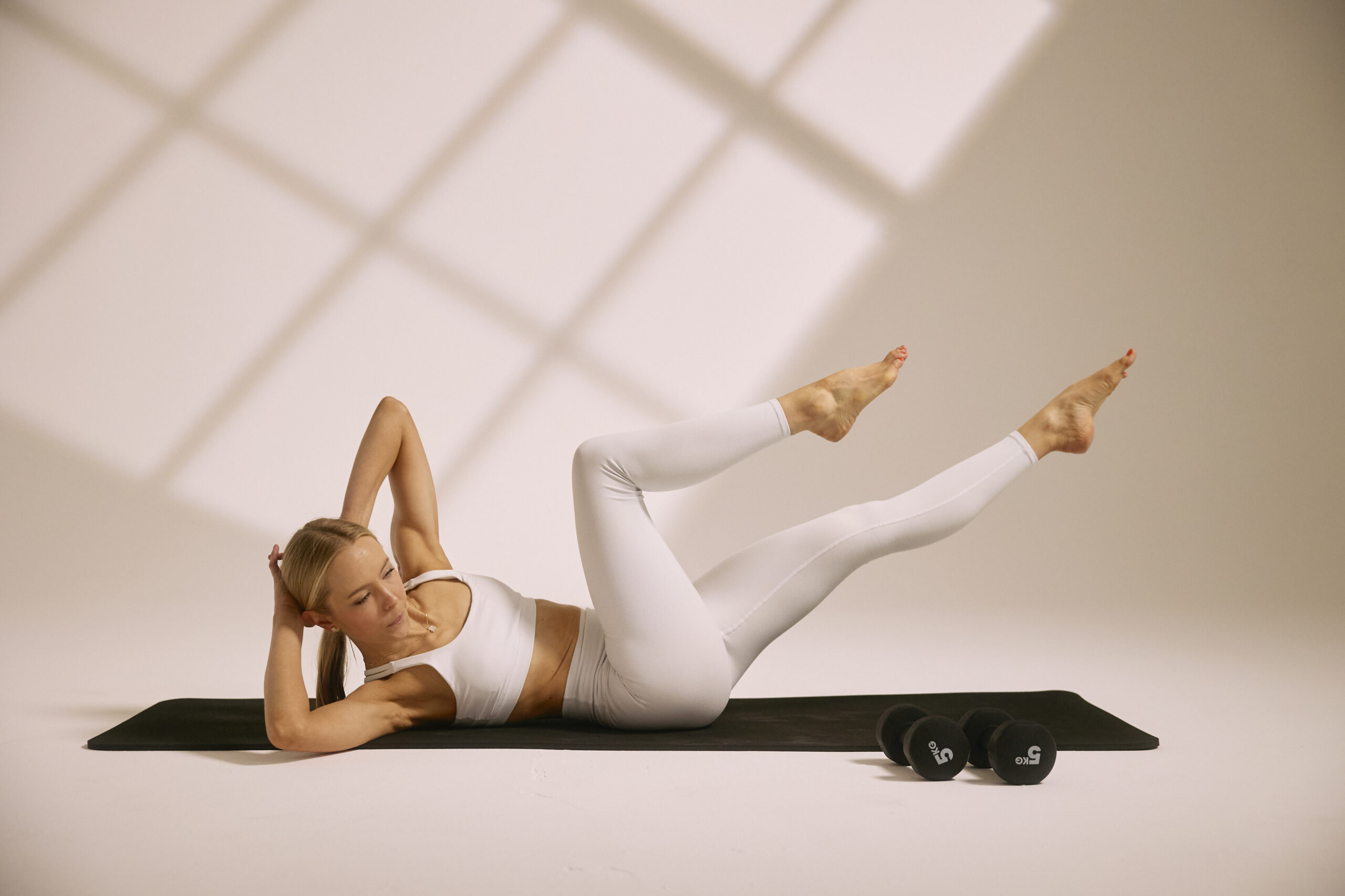
Once you have medical clearance, you can begin safe Pilates exercises for healing diastasis recti at home. Key movements include toe taps and heel slides. In a toe tap, you lie on your back and slowly lower one foot toward the floor while keeping your lower back pressed gently into the mat. The goal is to use the transverse abdominis to stabilize the pelvis against the weight of the leg.
Phase 3: Dynamic Integration (3-6 Months)
This is the stage for dynamic Pilates for postpartum abdominal separation recovery. We begin to move the limbs in more complex ways while keeping the core rock-solid. You might incorporate a small overball between your knees during bridges or use light resistance bands for arm movements. A clinical study showed that a consistent 6-week Pilates training program significantly reduced the mean inter-recti distance from 2.61 cm to 2.016 cm.
Phase 4: Functional Strength (6+ Months)
Now we move into strength-based abdominal separation recovery. This is often called "Pilates 2.0." You are no longer just "fixing a gap"; you are building a body that is stronger than it was before pregnancy. Research indicates that consistent Pilates exercises significantly improve abdominal muscle endurance and reduce waist circumference alongside narrowing the gap.
From Recovery to Strength: Rebuilding Posture
The true magic of Pilates for diastasis recti is not just found in the belly. It is found in how you stand and move through the world. Pregnancy shifts your center of gravity forward, often leading to an exaggerated curve in the lower back and rounded shoulders. Rebuilding core strength after severe postpartum diastasis recti involves realigning the entire skeletal system.
As your transverse abdominis gets stronger, your pelvis begins to sit in a more neutral position. This alleviates the chronic lower back pain that plagues so many new mothers. Understanding how Pilates improves posture after childbirth and diastasis recti allows you to move with confidence again. You stop bracing for pain when you pick up your toddler and start feeling a sense of integrated strength.
The goal of this journey is to transition from a state of "rehabilitation" to one of "empowerment." We aren't just trying to close a gap; we are upgrading the entire internal support system of the body. Functional movement becomes second nature, and the mind-body connection you built on the mat stays with you throughout your busy day.
FAQ
Is Pilates safe for diastasis recti?
Yes, Pilates is considered one of the most effective and safe methods for recovering from this condition, provided you modify the exercises to avoid excessive intra-abdominal pressure. It focuses on the deep core muscles that are essential for pulling the abdominal walls back together.
Which Pilates exercises should be avoided with diastasis recti?
You should avoid any movement that causes the abdominal wall to bulge or cone. This typically includes traditional crunches, full planks, double leg lifts, and aggressive twisting movements. Always prioritize stability over the range of motion.
Can Pilates close a gap in stomach muscles?
Pilates can significantly reduce the distance between the abdominal muscles by strengthening the transverse abdominis and improving the tension of the linea alba. While "closing" the gap completely isn't always the only measure of success, Pilates restores the functional integrity and strength of the core.
How soon after pregnancy can I start Pilates for diastasis recti?
You can usually begin very gentle breathwork and pelvic floor engagement within days of a healthy delivery. However, for actual exercise on a mat or reformer, you must wait for your 6-week postpartum checkup (or 12 weeks for a C-section) and receive specific clearance from your doctor.
How long does it take to see results from Pilates for diastasis recti?
Many women begin to feel a difference in their core stability within 3 to 4 weeks of consistent practice. Clinical research has shown significant measurable reduction in the abdominal gap and improvements in muscle endurance after a dedicated 6-week program.
The journey to healing after childbirth is deeply personal and often challenging. Remember that your body has performed a miracle, and it deserves time and patience to recover. By committing to just 10 minutes of mindful Pilates each day, you are making a micro-commitment to your long-term health. If you find that coning persists or you feel unsure about your form, I highly recommend seeking out a specialist postnatal Pilates instructor who can provide one-on-one guidance tailored to your specific needs. Your foundation is worth the investment.