Quick Facts
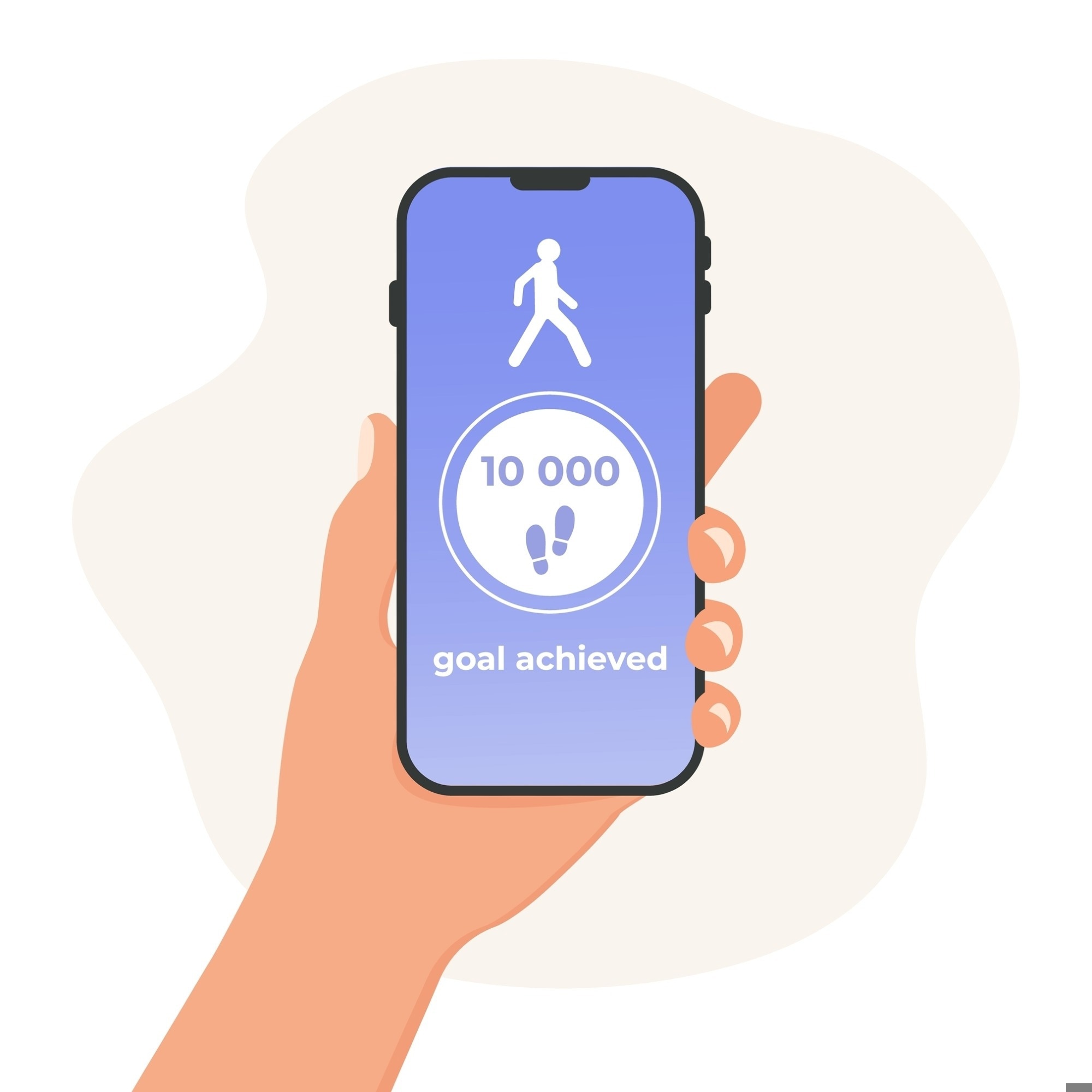
- The Myth: The 10,000-step goal originated from a 1965 Japanese marketing campaign for a pedometer, not from clinical health research.
- The Minimum: Significant cardiovascular protection begins at just 2,337 daily steps, reducing the risk of dying from heart-related issues.
- The Sweet Spot: Scientific data shows that 7,000 to 8,000 steps offer the most efficient return on investment for longevity and heart health.
- The Sedentary Offset: For those sitting more than 10.5 hours a day, a higher daily step count of 9,000 to 10,000 is needed to neutralize the risks of inactivity.
- Incremental Gains: Every additional 1,000 steps you take is associated with a 15% reduction in all-cause mortality risk.
- Intensity Matters: Walking at a brisk pace (roughly 100 steps per minute) provides metabolic benefits independent of the total volume.
While 10,000 steps is a popular benchmark, it is not a medical requirement. Science shows that a daily step count as low as 2,500–4,000 provides significant cardiovascular benefits, with the optimal target for heart health sitting between 7,000 and 8,000 steps.
The 10,000-Step Myth vs. Modern Science
For decades, the fitness industry has treated the 10,000-step target as a sacred number. If you did not hit five figures on your wearable device, the common perception was that you had failed your cardiovascular system for the day. However, as a longevity editor, I look at the data, and the data tells a different story about the historical context and myth-busting of this figure.
The number 10,000 was never the result of a double-blind study or a public health guidelines committee. It was a marketing tactic used to sell the Manpo-kei pedometer in Japan during the mid-1960s. The name translates roughly to 10,000-step meter. The character for 10,000 in Japanese looks like a person walking, and the round number was easy to remember.
Latest research on daily step count and mortality suggests we have been over-complicating our optimal physical activity goals. A 2023 meta-analysis of over 226,000 individuals published in the European Journal of Preventive Cardiology confirms that while more movement is generally better, the health curve starts to flatten long before you hit 10,000. In fact, is 10000 steps a day necessary for heart health is a question that science now answers with a clear no—at least not as a strict minimum.
The reality is that we see diminishing returns. The leap in health from 2,000 to 4,000 steps is massive. The leap from 8,000 to 10,000 is measurable but much smaller. Understanding this allows us to set more realistic daily step goals for heart disease prevention without the psychological burden of an arbitrary marketing number.
The Minimal Effective Dose: Starting at 2,500 Steps
If you are currently living a sedentary lifestyle, the idea of walking five miles a day can feel insurmountable. The good news is that the minimum steps for heart health are much lower than you might think. We often talk about the minimal effective dose in medicine—the smallest amount of a drug that produces a result. The same applies to movement.
The 2,337 step threshold for CVD risk reduction is the first major milestone. According to a study published in the European Journal of Preventive Cardiology, as few as 2,337 daily steps are associated with a significantly lower risk of dying from cardiovascular disease. This is a vital finding for anyone struggling with physical inactivity or chronic health barriers.
The data further shows that every 1,000-step increment in daily activity is associated with a 15% reduction in the risk of dying from any cause. Even smaller jumps matter; a 500-step increase correlates with a 7% reduction in cardiovascular mortality.
For those wondering about the minimum daily steps for cardiovascular health, the target of 4,000 to 4,500 steps is where the mortality curve drops sharply. This level of activity helps with blood pressure regulation and begins to improve the flexibility of your arteries. If you are starting from zero, don’t worry about the marathon; worry about the first 1,000 steps above your baseline. Incremental improvement is the key to sustainable longevity.

The Cardiovascular Sweet Spot: 7,000 to 8,000 Steps
While the benefits start early, there is a specific range where you get the most cardiovascular resilience for your time spent. This is what researchers often call the sweet spot. If your goal is maximizing longevity benefits and protecting against all-cause mortality, the target shifts slightly higher than the bare minimum.
Research published in JAMA indicates that adults who walk 8,000 steps per day have a 50% lower risk of all-cause mortality compared to those who only manage 4,000 steps. This is a profound improvement in metabolic health and heart function. Interestingly, after about 8,000 to 9,000 steps, the risk reduction curve begins to level off for most people.
Walking for cardiovascular benefits is about consistency. Reaching 7,000 steps daily is often enough to see significant improvements in insulin sensitivity and lipid profiles. Below is a breakdown of how different daily step count levels impact your health profile.
| Step Count | Health Impact Category | Primary Cardiovascular Benefit |
|---|---|---|
| 2,300 - 2,500 | Minimum Threshold | Significant reduction in cardiovascular death risk |
| 4,000 - 4,500 | Functional Base | Substantial reduction in all-cause mortality |
| 7,000 - 8,000 | The Sweet Spot | 50% lower mortality risk; optimal for heart resilience |
| 10,000+ | High Activity | Best for offsetting heavy sedentary behavior (10+ hours sitting) |
To put these numbers into a practical perspective, here is a quick conversion guide to help you plan your day:
- 2,000 Steps ≈ 1 Mile (1.6 km)
- 4,000 Steps ≈ 2 Miles (3.2 km)
- 7,000 Steps ≈ 3.5 Miles (5.6 km)
- 10,000 Steps ≈ 5 Miles (8.0 km)
For the average person, the benefits of 6000 to 8000 steps per day represent the peak efficiency for time spent walking versus the risk reduction gained.
The Sedentary Offset: Advice for Office Workers
There is one specific group of people for whom the 10,000-step goal is actually very relevant: the modern office worker. If your daily life involves a sedentary lifestyle where you are sitting for 10.5 hours or more, the physiological "tax" on your body is significantly higher.
Physical inactivity causes changes in how your body handles fats and sugars. When you sit for prolonged periods, your large leg muscles—the ones that act as metabolic engines—stay quiet. This leads to a rise in blood pressure and a decrease in the efficiency of your heart's ability to pump blood.
Daily step count for sedentary office workers needs to be higher to counteract the specific risks of sitting. Recent studies suggest that for those in the high-sedentary category, a daily step count of 9,000 to 10,000 is the specific range needed to neutralize the increased risk of death and heart disease. If you spend your day behind a desk, you aren't just walking for general health; you are walking to undo the damage of the chair.

Why Intensity Matters: Cadence vs. Volume
While we focus heavily on the daily step count, the quality of those steps shouldn't be ignored. Walking for cardiovascular benefits is not just about the distance; it is also about the intensity of the effort. You can achieve similar health outcomes with fewer steps if those steps are taken at a higher cadence.
A brisk walking pace is generally defined as 100 steps per minute. When you walk at this speed, you move into a zone of moderate-intensity aerobic activity. This level of exertion forces the heart to work harder, strengthening the cardiac muscle and improving lung capacity.
The beauty of cadence is that it is speed independent of volume. Even if you only have 20 minutes for a walk, keeping a brisk pace will provide more metabolic health benefits than a slow 45-minute stroll. If you find it hard to hit 8,000 steps, aim for 5,000 steps where at least 3,000 of them are performed at a brisk walking pace. This "quality over quantity" approach is a great way to maintain heart health on a busy schedule.
FAQ
Is 10,000 steps a day actually necessary?
No, 10,000 steps is not a medical necessity for most people. Research shows that cardiovascular benefits begin to peak at 7,000 to 8,000 steps. The 10,000-step figure was originally a marketing slogan, though it remains a good target for those who are highly sedentary or looking for extra weight management benefits.
Is 5,000 steps a day enough to stay healthy?
Yes, 5,000 steps is a significant improvement over a sedentary lifestyle. Science indicates that passing the 4,000-step mark correlates with a much lower risk of premature death compared to taking fewer than 2,500 steps. While 7,000 to 8,000 is more optimal, 5,000 steps provide a solid foundation for heart health.
What happens to your body when you walk 10,000 steps every day?
Walking 10,000 steps consistently improves your heart's stroke volume, lowers resting heart rate, and enhances insulin sensitivity. It also helps regulate blood pressure and can significantly reduce the risk of stroke and type 2 diabetes by improving how your body processes glucose and manages systemic inflammation.
What are the health benefits of increasing your daily step count?
Increasing your movement provides a cumulative reduction in mortality risk. Specifically, every 1,000 extra steps you take above your baseline reduces your risk of dying from any cause by roughly 15%. It also aids in mental clarity, improves sleep quality, and strengthens the lower body joints and muscles.
How many steps should a person take based on their age?
While targets vary, research suggests that for adults under 60, the optimal range for longevity is often between 8,000 and 10,000 steps. For adults over 60, the benefits often peak earlier, between 6,000 and 8,000 steps. However, the most important factor for all ages is moving more than you did yesterday.
Take Action
The most important takeaway from current longevity science is that you should not let the "perfect" goal of 10,000 steps become the enemy of the "good" goal of 4,000 steps. If you are currently hitting 3,000 steps, do not worry about doubling that number tomorrow.
Instead, focus on the next 500 steps. Realistic daily step goals for heart disease prevention are built on small, sustainable increments. If you can add just 1,000 steps to your daily routine—roughly a 10-minute walk—you are already making a statistically significant impact on your lifespan.
Longevity is a marathon, not a sprint. Whether it is taking the stairs, parking further away, or using a standing desk, every bit of incidental movement counts toward your daily step count and your long-term cardiovascular resilience. Focus on the 7,000–8,000 range as your target, but remember that the biggest health gain you will ever make is the transition from doing nothing to doing something.