Quick Facts
- Top Benefit: Consistent practice significantly increases cardiorespiratory endurance (VO2max) and overall muscle strength.
- Calorie Burn: A single round of Surya Namaskar burns an average of 13.91 calories and takes under four minutes to complete.
- Efficiency: Performing 12 sets involves completing 288 yoga postures, which typically takes only 12 to 15 minutes.
- Core Focus: These sequences target the core, hamstrings, and the endocrine system while improving spinal flexibility.
- Sequence Types: Sun Salutation A (foundational), Sun Salutation B (intensity and heat), and Sun Salutation C (classical Hatha).
Sun Salutation sequences vary in complexity and purpose. Sun Salutation A is the foundational flow, often used as a warm-up, featuring Plank and Chaturanga. Sun Salutation B increases intensity by adding Chair Pose and Warrior I, building greater heat and endurance. Sun Salutation C is a classical Hatha variation that includes low lunges, focusing on spinal flexibility and a slower, meditative pace.
The Science and Tradition of Surya Namaskar
As a preventive care editor, I often look for habits that offer the highest return on investment for your health. Surya Namaskar, which translates from Sanskrit as to bow to the sun, is perhaps the most efficient ritual in the yoga tradition. Beyond the spiritual roots of morning Sadhana, or daily practice, the modern application of these flows serves as a comprehensive system for physical and mental maintenance.
A 2015 study published in the International Journal of Yoga highlighted that Sun Salutation sequences are more than just physical exercise; they are a moving meditation. By utilizing Ujjayi breathing—a rhythmic, audible breath through the nose—you engage the parasympathetic nervous system. This transition from a state of "fight or flight" to "rest and digest" is essential for long-term stress reduction.
Scientific evidence supports these traditional claims. Scientific studies show that an 8-week consistent practice of Sun Salutations significantly increases cardiorespiratory endurance and muscle strength while reducing perceived stress levels. Whether you are looking for the best Sun Salutation sequences for morning energy or a way to wind down after a long day at the desk, understanding the mechanics of these three variations is key to a sustainable wellness routine.
Sun Salutation A: The Foundational Flow
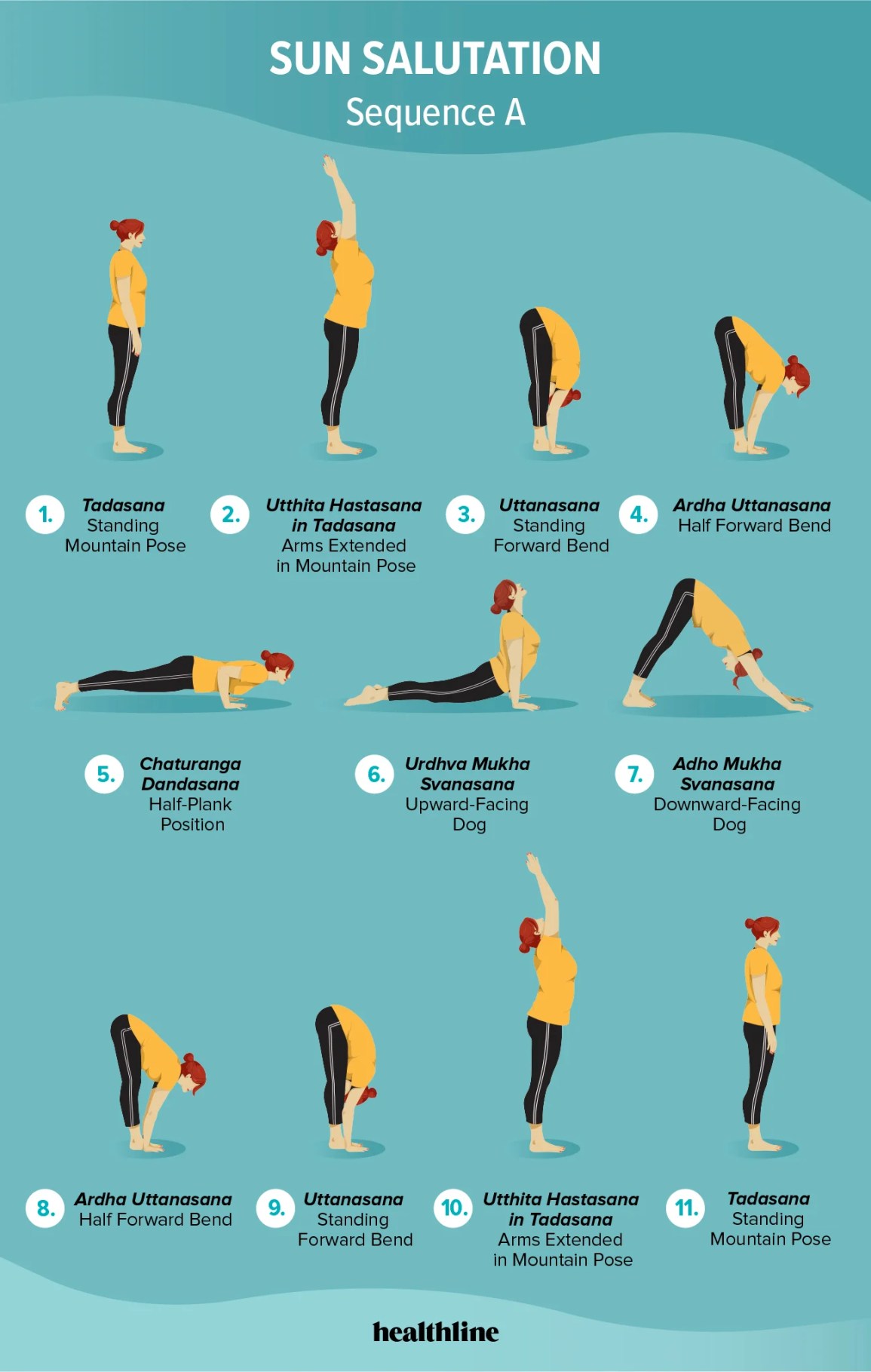
Sun Salutation A, or Surya Namaskar A, is the backbone of most Vinyasa flow classes. It is the gold standard for warming up the large muscle groups and establishing the connection between breath and movement, known as Vinyasa Krama. This Sun Salutation A beginner sequence guide focuses on linear movements that build heat progressively.
Step-by-Step Breakdown
- Tadasana (Mountain Pose): Stand at the top of your mat with feet together or hip-width apart. Focus on Tadasana alignment by grounding through the four corners of your feet and lengthening the spine.
- Urdhva Hastasana (Upward Salute): Inhale as you sweep your arms overhead, reaching toward the sky.
- Uttanasana (Standing Forward Fold): Exhale and hinge at the hips to fold forward, keeping a slight bend in the knees if your hamstrings feel tight.
- Ardha Uttanasana (Half Forward Fold): Inhale to find a flat back, lengthening the crown of your head forward.
- Chaturanga Dandasana (Four-Limbed Staff Pose): Exhale as you step or jump back to a high plank and lower halfway down. Keep your elbows tucked close to your ribs.
- Urdhva Mukha Svanasana (Upward-Facing Dog): Inhale as you press through your palms and the tops of your feet, lifting your chest and thighs off the mat.
- Adho Mukha Svanasana (Downward-Facing Dog): Exhale and lift your hips high, forming an inverted "V" shape. This pose is the heart of the flow, allowing for a brief moment of active recovery.
- Return to Top: After five breaths, inhale to look forward and step or hop to the front of the mat, returning to Ardha Uttanasana, then exhale into Uttanasana.
- Completion: Inhale back to Urdhva Hastasana and exhale to Tadasana.
Breath and Alignment Cues
- Inhale: Reach and expand the front body.
- Exhale: Contract and fold, or transition through strength-based movements.
- Safety Tip: One of the common alignment mistakes in Sun Salutations is "dumping" into the lower back during Upward Dog. Always engage your glutes and press firmly through the tops of your feet to protect your spine.
Consistent practice of these Surya Namaskar A and B steps ensures that your body becomes familiar with the transitions, making the yoga flow for beginners feel more like a dance and less like a chore.
Sun Salutation B: Building Strength and Heat
If Sun Salutation A is the warm-up, Sun Salutation B is the engine. Frequently found in the Ashtanga tradition, this variation is more demanding and includes 17 specific steps. It is often compared to a "Yoga Burpee" because of its focus on building cardiovascular endurance and lower body strength.
The primary differences in Surya Namaskar B steps for building strength are the addition of Utkatasana (Chair Pose) and Virabhadrasana I (Warrior I). These additions require more stability and stamina, making it an ideal choice for those looking to tone muscle and increase heart rate.
The Dynamic Elements of Sequence B
The flow begins in Tadasana but quickly moves into Utkatasana. In Chair Pose, you sit your hips back as if into an invisible chair, keeping the weight in your heels and arms reaching high. This immediately activates the quadriceps and glutes.
Following the initial vinyasa (plank to downward dog), you step your right foot forward for Virabhadrasana I. This pose demands both balance and power. You then repeat the vinyasa and perform Warrior I on the left side before returning to Downward-Facing Dog. This "double vinyasa" structure is what makes Sun Salutation B significantly more challenging than Sequence A.
Editor’s Note: Because Sun Salutation B involves more rapid transitions and higher heart rates, it is crucial to maintain Ujjayi breathing. If you find yourself gasping for air, slow down or return to Sequence A until your endurance improves.
Sun Salutation C: The Classical Hatha Variation
Sun Salutation C is the oldest of the three variations and is deeply rooted in Hatha yoga principles. While A and B are common in fast-paced Vinyasa classes, Sequence C is often used in more restorative or classical practices. Its defining feature is the low lunge (Anjaneyasana) and the inclusion of Ashtanga Namaskara (Knees-Chest-Chin pose) for those who prefer a gentler transition than Chaturanga.
This Sun Salutation C classical yoga sequence is particularly effective for improving spinal flexibility and opening the hip flexors. Because it involves a slower pace, it allows the practitioner to sink deeper into each pose, making it an excellent Sun Salutation C guide for those focused on flexibility over cardiovascular intensity.
The Flow of Sequence C
Instead of the "jump back" transitions found in Sequence A, Sequence C typically uses a stepping motion. You step one foot back into a low lunge, dropping the back knee to the earth. This stretch targets the psoas and hip flexors, which often become tight from prolonged sitting.
The sequence also traditionally uses "Knees, Chest, and Chin" to reach the floor, which provides a lovely arch in the spine and stimulates the thyroid gland. Because it alternates legs in the lunging phase, a "full round" of Sun Salutation C involves repeating the sequence twice to ensure both the right and left sides of the body are balanced.
Comparing Sun Salutation A, B, and C
Choosing between Sun Salutation sequences depends entirely on your goals for the day. If you are short on time and want a quick full-body wake-up, Sequence A is your best friend. If you want to sweat and build power, Sequence B is the way to go. If you are feeling stiff and need a meditative, stretchy session, reach for Sequence C.
Comparison Table: Sun Salutation Variations
| Feature | Sun Salutation A | Sun Salutation B | Sun Salutation C |
|---|---|---|---|
| Traditional Source | Ashtanga / Vinyasa | Ashtanga / Vinyasa | Classical Hatha |
| Primary Focus | Foundation & Warm-up | Strength & Heat | Flexibility & Opening |
| Difficulty Level | Intermediate | Advanced | Beginner-Friendly |
| Key Poses | Plank, Chaturanga | Chair Pose, Warrior I | Low Lunge, Knees-Chest-Chin |
| Pace | Moderate | Fast | Slow / Meditative |
When comparing Sun Salutation A B and C sequences, it is helpful to remember the tradition of 108 Surya Namaskars. This practice is often performed during seasonal solstices or special events. While 108 rounds of Sequence B would be an elite athletic feat, many practitioners find that a mix of A and C allows them to complete the marathon-like session while maintaining mental focus and physical integrity.
FAQ
What are the different types of Sun Salutation sequences?
The most common types are Sun Salutation A, B, and C. Sequence A is the foundation of Vinyasa yoga. Sequence B is an intensified version used for building strength and endurance. Sequence C is a classical Hatha version that emphasizes hip opening and spinal flexibility through low lunges.
What is the difference between Sun Salutation A and Sun Salutation B?
Sun Salutation A is a shorter flow consisting of about 9 to 11 movements. Sun Salutation B is longer (17 movements) and adds two Chair Poses and two Warrior I poses. This makes Sequence B much more demanding on the cardiovascular system and the lower body.
What are the benefits of practicing Sun Salutations?
Practicing Sun Salutations provides a full-body workout that improves cardiovascular health, spinal flexibility, and muscular strength. By synchronizing movement with Ujjayi breathing, practitioners enhance their mental focus and reduce stress. It also helps in detoxifying the body by building internal heat.
Can beginners do Sun Salutation sequences?
Yes, Sun Salutations are highly adaptable. Beginners can start with Sun Salutation C because it is slower and includes modifications like dropping the knees to the mat. In Sequence A, beginners can modify Chaturanga by placing their knees on the floor and replace Upward-Facing Dog with a gentle Cobra Pose to protect the lower back.
What are the 12 poses in a traditional Sun Salutation?
The traditional Sun Salutation C consists of 12 positions: 1. Prayer Pose, 2. Raised Arms Pose, 3. Hand to Foot Pose, 4. Equestrian Pose (Lunge), 5. Stick Pose (Plank), 6. Saluting with Eight Parts (Knees-Chest-Chin), 7. Cobra Pose, 8. Mountain Pose (Downward Dog), 9. Equestrian Pose, 10. Hand to Foot Pose, 11. Raised Arms Pose, and 12. Tadasana.
How many rounds of Sun Salutations should I do daily?
For general health and maintenance, 6 to 12 rounds is a standard recommendation. This takes about 10 to 15 minutes and ensures you move through all major joints. Some practitioners choose to do more for weight loss or endurance, but consistency is more important than the total number of repetitions.