Quick Facts
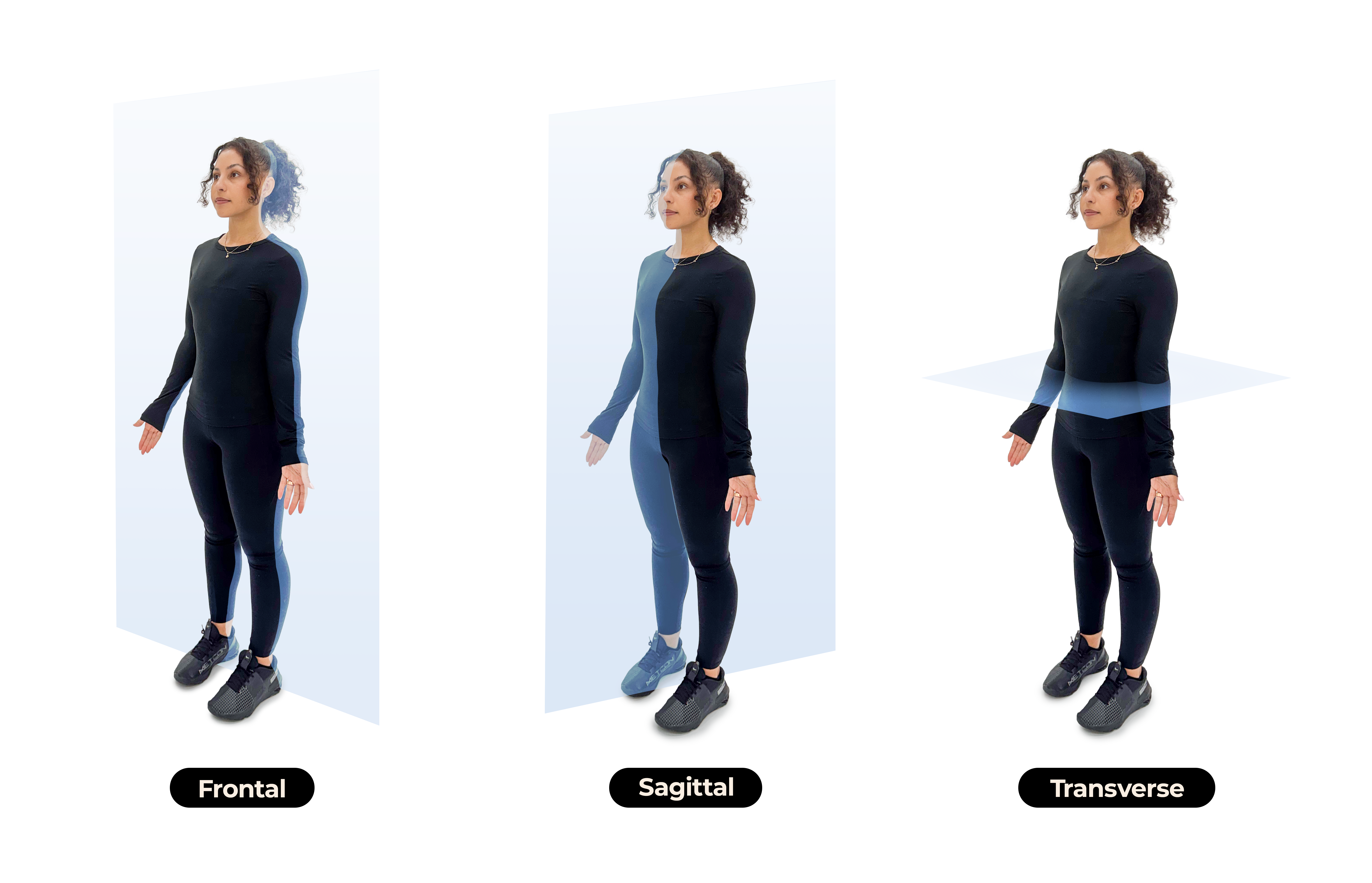
- The Three Planes: Anatomical planes consist of the sagittal (dividing left/right), frontal (dividing front/back), and transverse (dividing top/bottom).
- Core Movements: Key patterns include flexion and extension, abduction and adduction, and internal or external rotation.
- Injury Prevention: Training across all three anatomical planes is critical for joint resilience, specifically for preventing ACL tears.
- Performance Benefit: Multi-planar movement patterns improve proprioception, core power, and the overall efficiency of the kinetic chain.
- Balanced Routine: Progress from stable sagittal movements like squats to complex frontal and transverse exercises.
- Critical Insight: Most traditional training is sagittal-dominant, which leads to muscle imbalances and increased injury risk.
The three anatomical planes—sagittal, frontal, and transverse—divide the body to describe how it moves in space. The sagittal plane involves forward and backward motions like flexion and extension. The frontal plane covers side-to-side movements such as abduction and adduction, while the transverse plane facilitates rotational movements, including internal and external rotation of the joints and spine.
Training across all three anatomical planes is essential for developing functional strength and preventing injuries. Most daily activities and sports are multi-planar, requiring the body to stabilize and move in multiple directions simultaneously. Focusing on a single plane can lead to muscle imbalances, whereas multi-planar exercise routines improve proprioception, core power, and the overall efficiency of the kinetic chain.

Understanding the 3 Planes: The 'Plate of Glass' Metaphor
To master your movement, you must first understand the standard anatomical position: standing upright, feet shoulder-width apart, with palms facing forward. From this baseline, we use the anatomical planes to map out every possible human motion. A helpful way to visualize this is through the 'Plate of Glass' metaphor. Imagine a large pane of glass slicing through your body in different directions. Your movement can only occur along the surface of that glass.
When we talk about anatomical planes definitions, we are essentially looking at how we divide the body into sections to understand biomechanics. These divisions help us distinguish between medial (toward the midline) and lateral (away from the midline) movements, as well as superior (above) and inferior (below) positions. By understanding these spatial divisions, you can identify which muscles are being recruited and how the kinetic chain is absorbing force. This knowledge is fundamental for anyone wondering how to use anatomical planes for better workouts, as it allows for a more intentional selection of exercises that target neglected areas of body alignment and an axis of rotation.
| Plane | Division | Primary Movements | Example Exercise |
|---|---|---|---|
| Sagittal | Left and Right | Flexion, Extension | Squat, Bicep Curl |
| Frontal | Front and Back | Abduction, Adduction | Lateral Lunge, Side Raise |
| Transverse | Top and Bottom | Rotation, Horizontal Adduction | Woodchop, Bench Press |
The Sagittal Plane: Forward and Backward Motion
The sagittal plane is where most people spend 90% of their time in the gym. It divides the body into left and right halves. If you imagine a glass pane pressed against your sides, any movement that goes forward or backward stays within this plane. The primary actions here are flexion and extension. When you bend your elbow during a curl or hinge at the hips for a deadlift, you are performing sagittal movements.
While these are the foundation of strength, relying solely on them creates a narrow corridor of fitness. The majority of traditional strength training exercises are performed in the sagittal plane, which can lead to muscle imbalances and increased injury risk during activities requiring lateral or rotational movements. For athletes, focusing on sagittal plane exercises for joint mobility is a great start, but it cannot be the end of the program. Common sagittal plane exercises include squats, lunges, deadlifts, and rows. These movements are excellent for building raw power and linear speed, but they rarely challenge your stability in the ways that real-world sports do.
Pro Tip: To improve range of motion in the sagittal plane, focus on eccentric control during the extension phase of your movements. Slowing down the "down" portion of a squat or bench press builds significant connective tissue strength.

The Frontal Plane: Side-to-Side Stability
The frontal plane, also known as the coronal plane, divides the body into front and back halves. Imagine a pane of glass in front of you and one behind you; the only way to move is to slide side-to-side. The primary actions in this plane are abduction (moving a limb away from the midline) and adduction (bringing it toward the midline). This plane is the secret to bulletproof hips and lateral agility.
Developing frontal plane movements for hip stability is often the "missing link" for runners and field athletes. When you perform frontal movements like lateral lunges, side-lying leg raises, or even jumping jacks, you engage the gluteus medius and the adductors. These muscles are vital for maintaining pelvic alignment. If these muscles are weak, your knees may collapse inward during sagittal movements like squats—a common precursor to injury. Training here ensures your dynamic balance remains high even when you are forced to change direction quickly.

The Transverse Plane: The Power of Rotation
The transverse plane divides the body into top (superior) and bottom (inferior) halves. This horizontal plane is where all rotational movement happens. Movements include internal and external rotation of the limbs and rotation of the spine. Interestingly, the bench press is technically a transverse movement because it involves horizontal adduction—moving the arms toward the midline along a horizontal path.
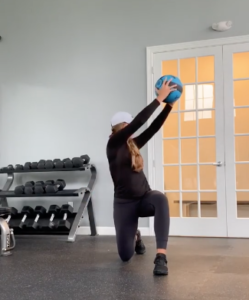
Building rotational strength is essential for generating "anti-rotational" stability and explosive power. However, it is also the most dangerous plane if you are unprepared. A significant percentage of exercise-related injuries occur during rotational movements in the transverse plane, emphasizing the need for stability training in more than just forward and backward directions. Utilizing transverse plane strength training for core power—through exercises like woodchops, medicine ball twists, and Turkish get-ups—allows you to transfer force from the lower body to the upper body effectively. This is where multi-planar movement patterns truly come to life, turning a static athlete into a dynamic one.
Optimizing Your Movement: Creating a Balanced Routine
Most modern fitness enthusiasts suffer from "sagittal dominance." We sit at desks (sagittal), walk (sagittal), and then go to the gym to do squats and presses (sagittal). To optimize every movement you make, you must break out of this one-dimensional box. Creating a balanced multi-planar exercise routine is about more than just variety; it is about injury prevention. Research indicates that anterior cruciate ligament (ACL) injuries are more likely to occur during complex multi-planar movements than in single-planar motions, making training across all three anatomical planes critical for joint resilience.
To effectively incorporate anatomical planes into a workout, start with a progression strategy. Begin your session with stable sagittal loads to prime the nervous system. As you move through your workout, introduce frontal plane movements to challenge lateral stability. Finally, finish with dynamic transverse movements to build core power.
Technical Pitfall: When performing lateral lunges for the first time, many people experience kyphosis (rounding of the upper back) as they reach for the floor. A solid rule is to limit your load—sometimes called the 10lb rule—until you can maintain a neutral spine. Focus on the hip hinge rather than the reach to keep the movement safe and effective.
By integrating multi-planar patterns, you improve muscle recruitment and proprioception. You stop being someone who just "lifts weights" and start being someone who moves with athletic precision. This comprehensive approach ensures that the entire kinetic chain is prepared for the unpredictable stresses of daily life and high-level sport.

FAQ
What are the three primary anatomical planes?
The three primary anatomical planes are the sagittal plane, the frontal plane, and the transverse plane. These imaginary lines divide the body into sections (left/right, front/back, and top/bottom) to help professionals describe movement and anatomy with precision.
Which plane divides the body into top and bottom halves?
The transverse plane, also known as the horizontal plane, divides the body into superior (top) and inferior (bottom) halves. It is the plane in which rotational movements, such as twisting the torso or rotating the hips, occur.
What movements occur in the frontal plane?
The frontal plane is responsible for side-to-side movements. Specifically, it involves abduction (moving a limb away from the center of the body) and adduction (moving a limb toward the center). Examples include jumping jacks and side-stepping.
Is a frontal plane the same as a coronal plane?
Yes, the frontal plane is frequently referred to as the coronal plane. Both terms describe the vertical plane that divides the body into anterior (front) and posterior (back) portions.
What are some examples of transverse plane exercises?
Examples of transverse plane exercises include cable woodchops, medicine ball rotational throws, Russian twists, and seated hip rotations. Even the bench press is considered a transverse movement due to the horizontal adduction of the shoulders.