Quick Facts
- Primary Goal: Active control over full range of motion.
- Injury Prevention: High mobility scores correlate with 6x lower injury risk.
- Time Commitment: 10-20 minutes daily for measurable improvement.
- Key Techniques: CARs, PAILs, and Myofascial Release.
- Core Difference: Mobility is active (strength + flexibility), whereas flexibility is passive.
- Results: Improved movement longevity and functional movement patterns.
Mobility training involves exercises that combine flexibility and strength to improve the active range of motion within a joint, essential for functional movement patterns and long-term joint health. It is the bridge between simply being "bendy" and having the neurological control to use that range in sport and daily life.
The Science of Movement Longevity
To understand how to move better, we have to look at the body as an integrated system. We often talk about the kinetic chain, which is the idea that our joints and segments effect one another during movement. If your ankle is locked up, your knee and hip have to compensate, leading to a cascade of efficiency losses and potential pain. This is why joint articulation is the foundation of any high-performance training program.
The nervous system governs how far you can move through two primary sensory receptors: muscle spindles and Golgi Tendon Organs (GTO). Muscle spindles detect changes in muscle length and speed, often triggering a "stretch reflex" to prevent tearing. GTOs, located where muscles meet tendons, sense tension. When tension becomes too high, they tell the muscle to relax. Mobility training works by teaching the nervous system that a specific range of motion is safe, thereby overriding these protective brakes.
Modern life is the enemy of this process. A sedentary lifestyle creates chronic adaptations in our tissues. When we sit for eight hours a day, our hip flexors shorten, our glutes "turn off," and our thoracic spine rounds forward. This leads to poor postural alignment and a significant decrease in pliability. Over time, the fascial elasticity—the "springiness" of our connective tissue—diminishes, leaving us feeling stiff and prone to injury.

Movement longevity depends on your ability to maintain connective tissue health. By regularly challenging your joints through their full range, you encourage the production of synovial fluid and keep the joint capsules hydrated and resilient.
Clinical Foundations: CARs, PAILs, and RAILs

In the world of professional athletic performance, we use specific clinical tools to improve how a joint functions. The most foundational of these are Controlled Articular Rotations, or CARs. These are active, circular movements performed at the outer limits of a joint's range of motion. Unlike a simple arm circle, CARs require maximal tension and slow, deliberate control. They serve as a daily "maintenance" check for your joints, ensuring you don't lose the range you already have.
When we want to actually expand that range, we move into more advanced protocols: Progressive and Regressive Angular Isometric Loading, or PAILs and RAILs. These techniques use isometric loading at the end-range of a stretch to build strength.
Knowing how to use CARs and PAILs for joint health is a game-changer because it addresses the gap between passive flexibility and active mobility. If you can pull your leg into a high kick with your hands (passive) but can't lift it there using only your hip muscles (active), you have a "mobility gap." This gap is where most injuries occur. By using isometric loading, you teach your brain to control the tissue at its most vulnerable, elongated state, effectively building end-range strength.
| Feature | Mobility | Flexibility |
|---|---|---|
| Definition | Active control through a range of motion | Passive range of motion |
| Components | Strength + Flexibility + Motor Control | Muscle length |
| Best For | Performance and injury prevention | Increasing passive reach |
| Example | A deep, controlled bodyweight squat | A seated hamstring stretch |
The Head-to-Toe Library: Mobility Exercises for Beginners
If you are just starting out, your focus should be on creating a baseline of joint health. These mobility exercises for beginners are designed to hit the most common "sticking points" in the human body.
Thoracic Spine and Shoulders
Most people lack movement in their upper back, which forces the lower back and neck to do extra work. Thoracic rotations on all fours or "thread the needle" drills are excellent starting points. For the shoulders, focus on active reaches. You can begin using resistance bands for active mobility drills to provide a slight external load, which helps the nervous system "find" the target muscles.
The Hip Complex

Hip health is central to almost every athletic movement. The 90/90 rotation is a gold standard here. Sit on the floor with one leg bent at 90 degrees in front of you and the other at 90 degrees to the side. Simply sitting in this position improves internal and external rotation.
Ankles and Squat Depth

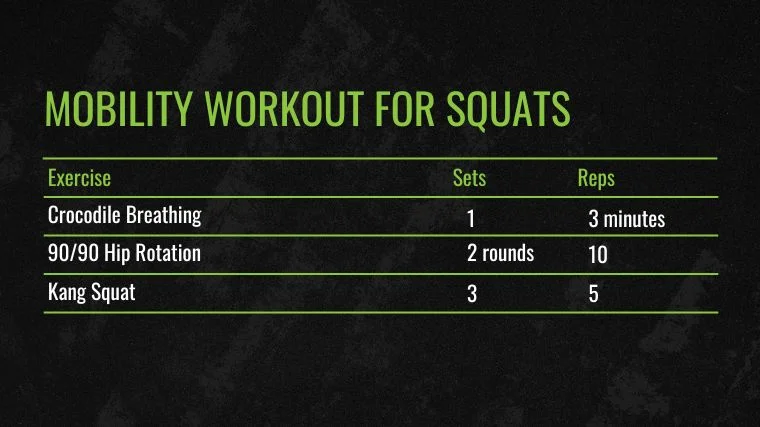
Ankle stiffness is the most common reason people struggle with their squat form. Use wall ankle drives—standing with your toes a few inches from a wall and driving your knee forward to touch it—to improve dorsiflexion. Consistently performing these mobility drills for improving squat depth and form will allow you to keep an upright torso and reach a deeper, safer position under load.
Coach’s Tip: When performing any mobility drill, focus on "irradiation." Squeeze your core and create tension in the rest of your body. This makes the movement safer and more effective by providing a stable base for the joint to rotate against.
The 15-Minute Daily Flow: At-Home Routine
Consistency beats intensity every time. You don't need an hour in the gym to see results. An at-home mobility training routine for beginners can be done in your living room in just 15 minutes. This flow is designed to reset your body after a long day or prime it before a workout.
| Exercise | Duration | Focus |
|---|---|---|
| Dynamic Warm-up | 5 Minutes | Increasing tissue temperature and blood flow |
| CARs Circuit (Neck, Shoulders, Hips) | 5 Minutes | Maintaining joint articulation |
| PAILs/RAILs (Targeted Area) | 3 Minutes | Building end-range strength |
| Myofascial Release | 2 Minutes | Improving pliability and fascial elasticity |
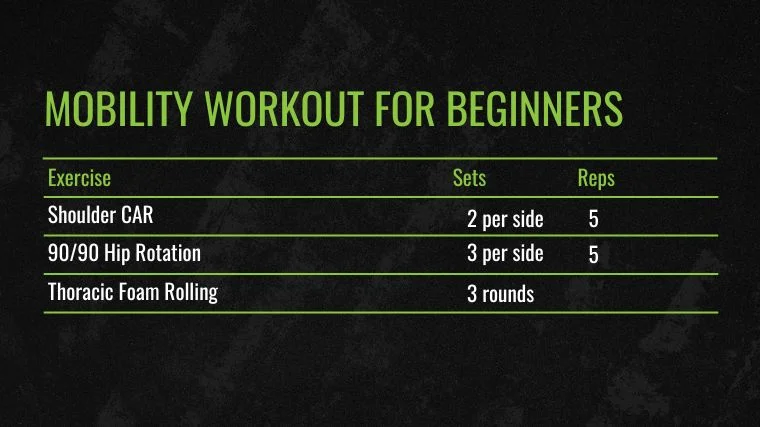
For those trapped at a desk, integrating quick mobility movement snacks for office workers is essential. Every 60 minutes, stand up and perform three slow neck CARs and five standing hip circles. These small "snacks" prevent the connective tissue from "setting" into a restricted postural alignment.
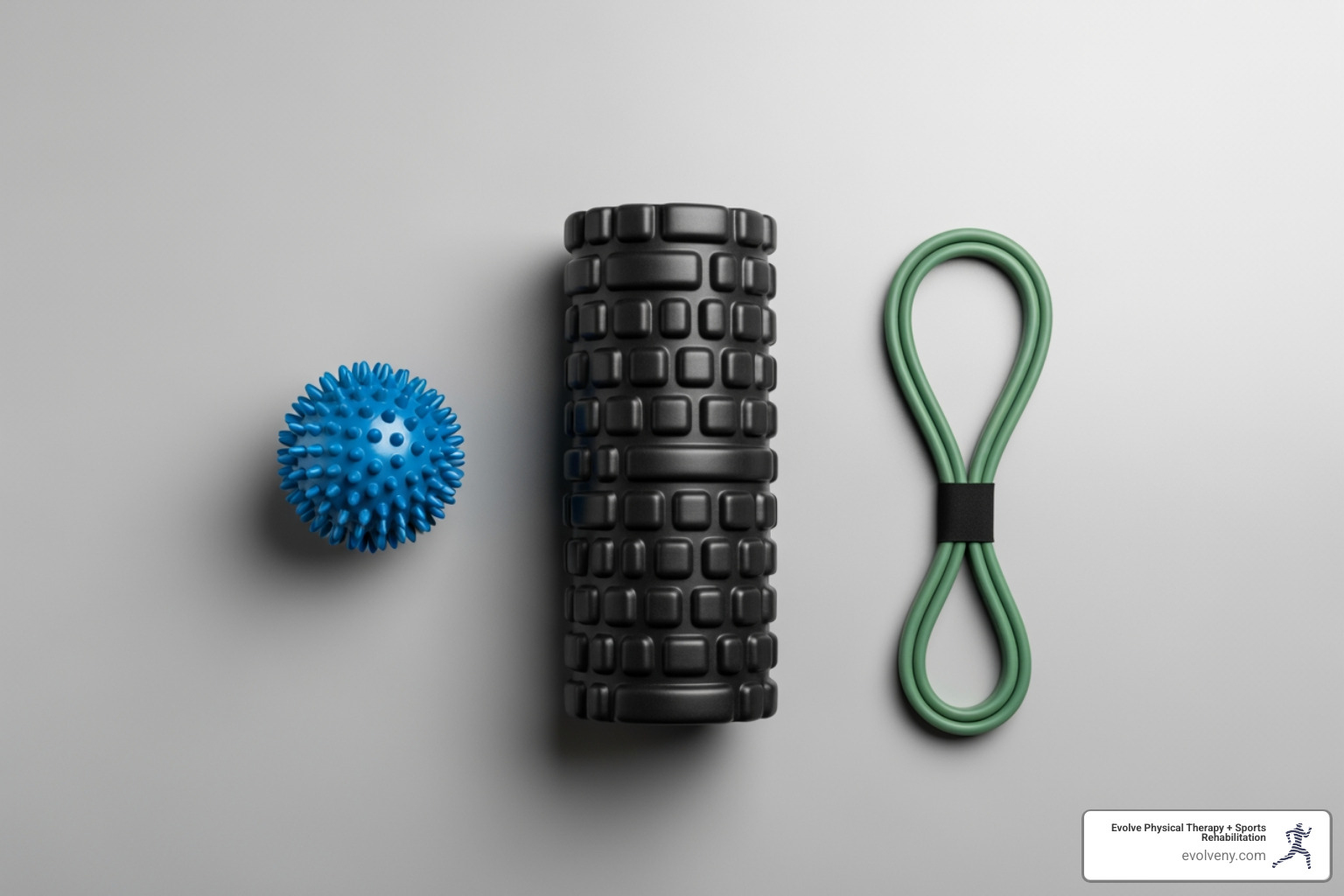
Toward the end of your session, incorporating myofascial release with a foam roller or lacrosse ball can help address localized "knots" or adhesions. This supports the sliding surfaces of your muscles, ensuring the layers of tissue move independently and smoothly.
Advanced Applications: Running and Performance
For athletes, mobility training is not just about feeling good; it’s about power and efficiency. Take runners, for example. If a runner lacks hip extension, they cannot fully utilize their glutes, leading to a shorter stride and increased stress on the lower back.
There are several essential mobility exercises for long distance runners that focus on the big toe, the ankle, and the hip. Improving proprioception—the body's ability to sense its position in space—through mobility drills allows runners to adapt to uneven terrain and maintain better mechanics under fatigue. When your joints have a higher capacity for movement, the kinetic chain can absorb and redistribute the impact forces of each stride more effectively, resulting in improving joint range of motion for injury prevention.

Safety and The 'Push vs. Pain' Rule
One of the biggest mistakes beginners make is pushing too hard, too fast. While mobility work often involves "discomfort," it should never involve "pain." Discomfort feels like a deep stretch, a heavy muscular effort, or a slight "burning" sensation. Pain feels like a sharp, stabbing, or radiating sensation, often described as a "pinch."
If you feel a closing-side joint pinch—for example, if you feel a sharp pain in the front of your hip while stretching the front of your hip—stop immediately. This usually indicates a structural impingement rather than a muscular restriction. Focus on controlled, smooth movements and slowly build your tolerance. Improving joint flexibility is a marathon, not a sprint.
FAQ
What is mobility training and why is it important?
Mobility training is the practice of improving your active control over a joint's range of motion. It is important because it ensures your body can move through its intended patterns without restriction, reducing the risk of injury and improving overall athletic performance and daily comfort.
What is the difference between mobility and flexibility?
Flexibility refers to the passive length of a muscle (how far someone else can move you), while mobility refers to the active control of a joint through its range (how far you can move yourself). Mobility requires strength and neurological control, whereas flexibility is simply a measure of tissue extensibility.
How often should you do mobility training?
For best results, mobility work should be done daily. While long sessions are great, even 10 to 15 minutes of consistent daily movement is enough to see significant improvements in how your joints function and feel.
Can you do mobility exercises every day?
Yes, you can and should do mobility exercises every day. Unlike heavy weightlifting, which requires significant recovery time, low-to-moderate intensity mobility drills like CARs are restorative and help maintain healthy joint surfaces and tissue pliability.
Is mobility training better before or after a workout?
It depends on the goal. Before a workout, dynamic mobility is best to "wake up" the nervous system and prime the joints for movement. After a workout, longer-duration stretches and myofascial release are better for down-regulating the nervous system and aiding in tissue recovery.
Does mobility training help with injury prevention?
Absolutely. Most non-contact injuries occur when a joint is forced into a range of motion that the body cannot control. By expanding your active range and building end-range strength, you create a larger "buffer zone" of safety, making your body more resilient to unexpected movements.