Quick Facts
- Success Rate: Approximately 80% to 90% of individuals with sciatica improve within several weeks through conservative management like exercise.
- Recovery Window: Most patients see significant resolution within 6 to 12 weeks of consistent physical therapy.
- Clinical Sign: Centralization, where pain moves from the leg back toward the lower back, is the primary indicator of recovery.
- Nerve Movement: Effective nerve flossing requires the sciatic nerve to achieve roughly 2 to 3 cm of glide within the spinal canal.
- Prevalence: The lifetime prevalence of sciatica in the general adult population is estimated to range from 10% to 40%.
- Primary Cause: About 90% of sciatica cases are caused by a herniated disc.
Effective sciatica relief exercises prioritize centralizing pain toward the lower back through the McKenzie Method. By utilizing specific movements like nerve flossing to reduce nerve adhesions and exercises to centralize sciatica pain in lower back regions, patients can alleviate pressure on the nerve root and restore mobility without surgical intervention.
Understanding the Source: Why Your Back Hurts
To fix the pain, we have to understand the mechanics of the lumbar spine. Sciatica isn't a diagnosis itself; it is a symptom of an underlying issue affecting the sciatic nerve, the largest nerve in your body. This nerve is formed by the union of five nerve roots in the lumbar vertebrae and sacral spine (L4 through S3). When one of these roots is compressed, you experience radiculopathy—the technical term for the radiating pain, numbness, or tingling that travels down your leg.
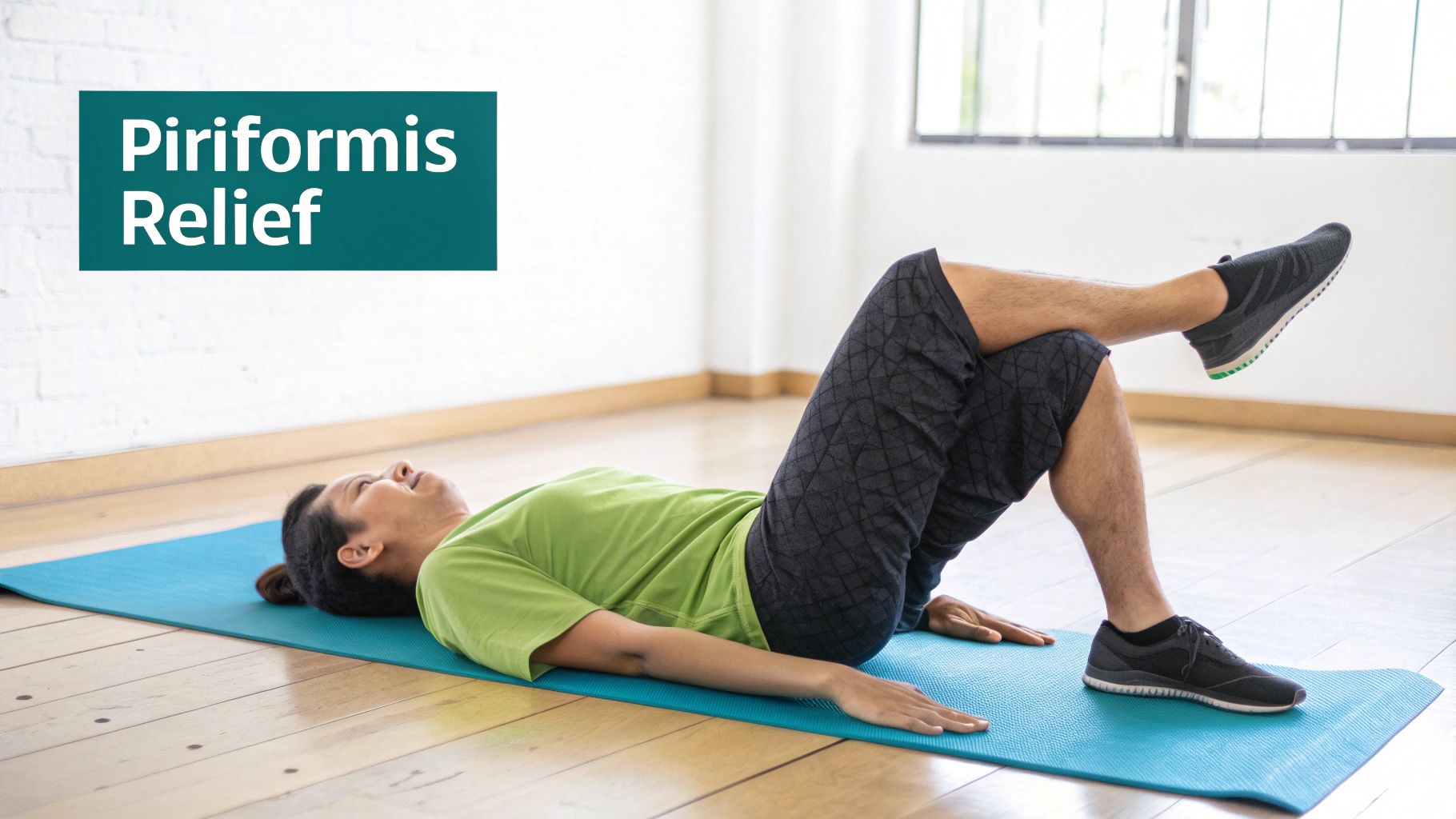
In the training world, we focus on two primary culprits. The most common is a herniated disc, where the soft inner gel of a spinal disc leaks out and irritates the nearby nerve. The second is Piriformis syndrome, where a small muscle in the gluteal region becomes tight or spasms, trapping the sciatic nerve against the pelvis. While both feel similar, the rehabilitation approach differs slightly. A herniated disc often requires spinal extension, while piriformis issues respond better to progressive hip mobility.
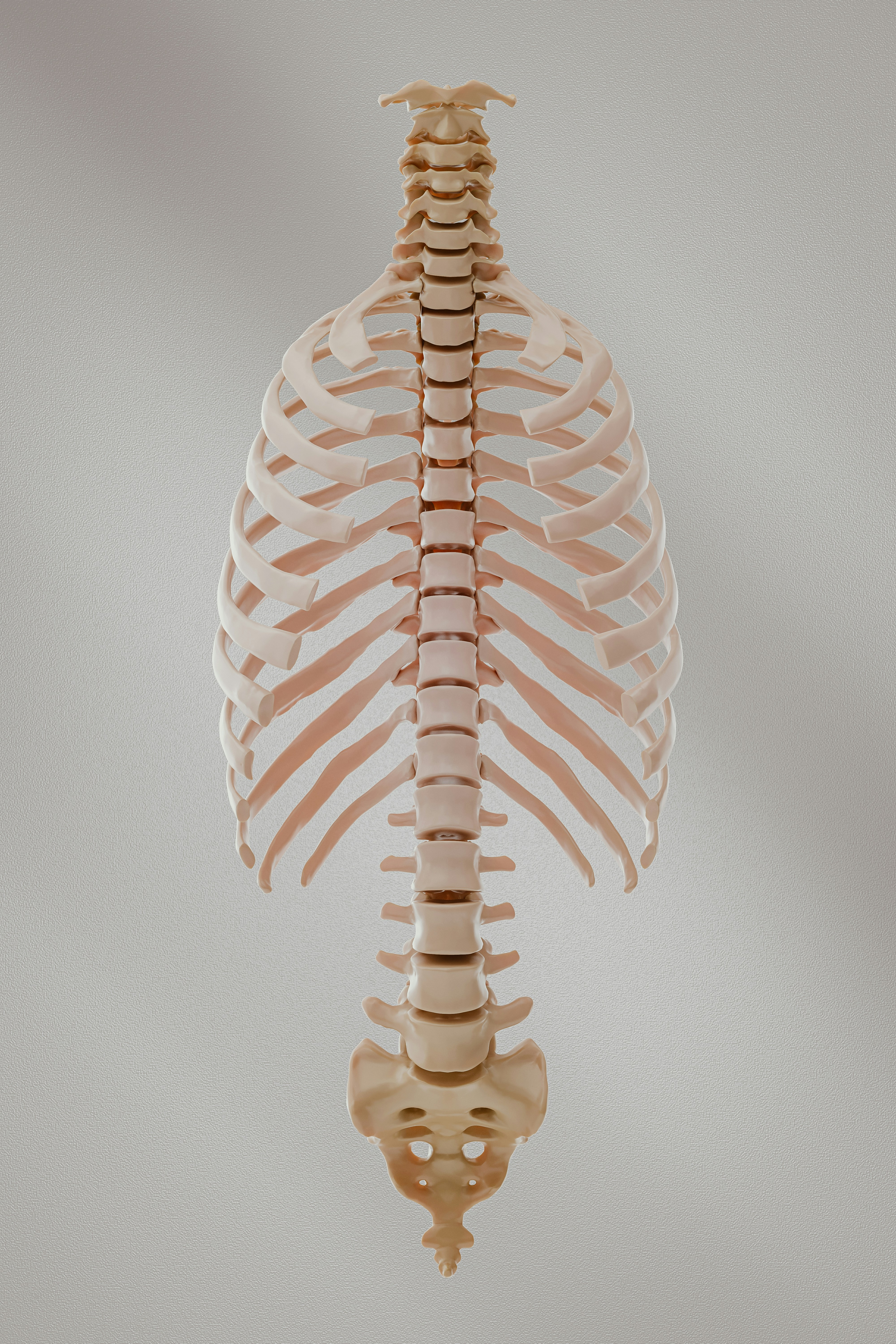
Before you begin any lumbar spine mobility exercises, you must screen for "Red Flags." If you experience a sudden loss of bowel or bladder control, extreme muscle weakness that prevents you from standing, or "saddle anesthesia" (numbness in the groin area), stop reading and go to the emergency room immediately. These are signs of Cauda Equina Syndrome, a surgical emergency. However, for the 5% to 10% of people with lower back pain who are found to have sciatica, the following conservative progression is the gold standard for recovery.
Phase 1: Nerve Flossing for Acute Pain Relief
When you are in the acute phase of a flare-up, the nerve is often "tethered" by inflammation or scar tissue. Traditional stretching can actually make this worse by putting the nerve under high tension. This is where nerve flossing for sciatica comes in. Also known as nerve gliding, this technique involves moving the nerve back and forth through the spinal canal without pulling it tight at both ends simultaneously. Think of it like a dental floss movement—you pull one end while loosening the other.
| Feature | Nerve Flossing | Muscle Stretching |
|---|---|---|
| Action | Rhythmic, oscillating movement | Static hold |
| Feeling | Gentle "sliding" sensation | Deep "pulling" or tension |
| Reps | 10–15 repetitions | 30–60 second holds |
| Goal | Reduce nerve adhesions | Lengthen muscle fibers |
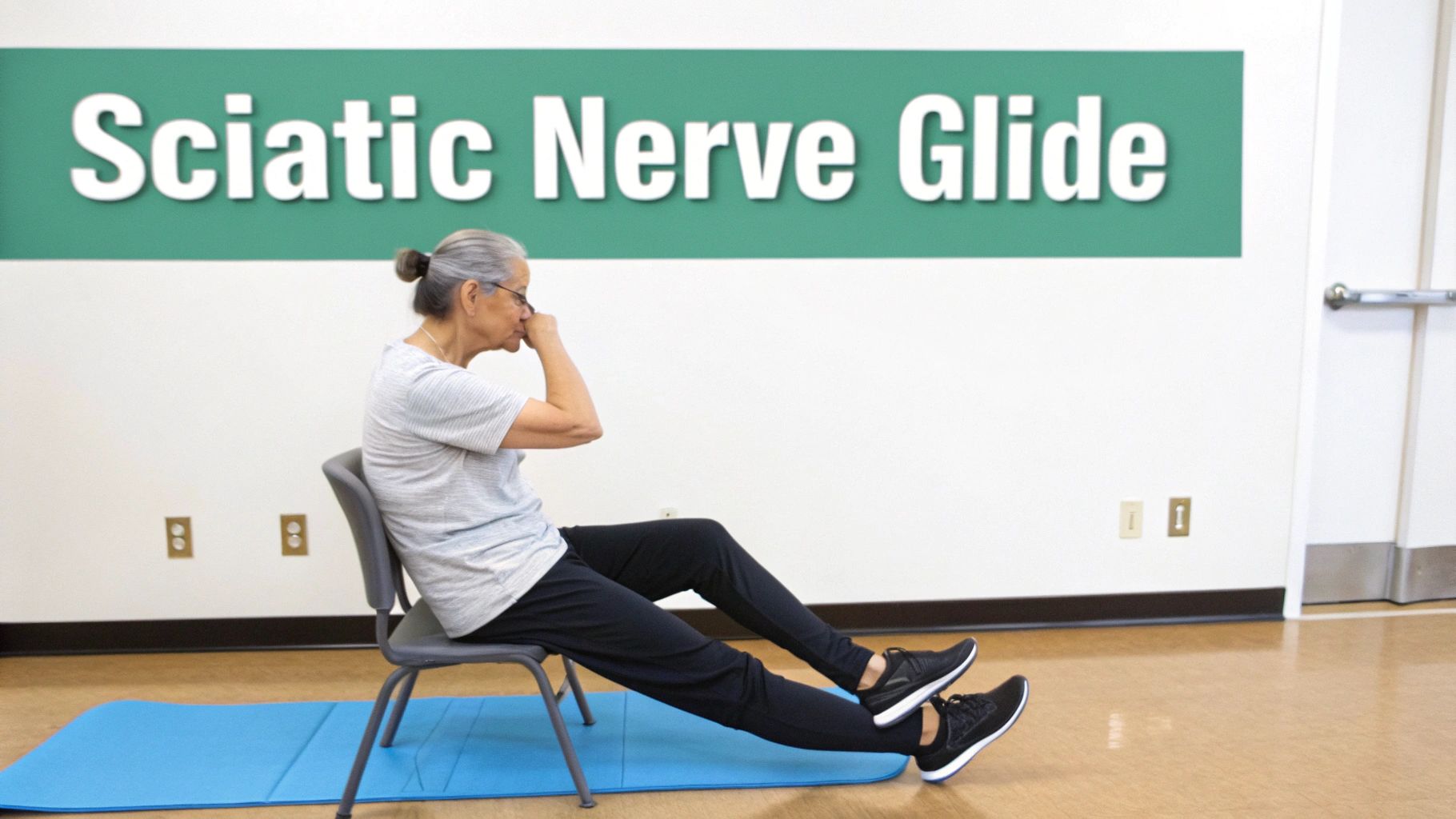
Seated Nerve Flossing
This is one of the best beginner sciatica relief exercises at home because it allows for total control over the tension levels.
- Starting Position: Sit upright in a chair with your legs hanging at 90 degrees. Tuck your chin slightly toward your chest and slump your mid-back forward.
- Action: Slowly straighten the affected leg while simultaneously looking up at the ceiling. Then, bend the knee back down while tucking your chin back toward your chest.
- Common Mistake: Straightening the leg while keeping the chin tucked. This creates maximum tension (a "tensioner" move) rather than a "glide." Always move the head and the foot in the same direction to keep the nerve slack.
Perform 10 to 15 rhythmic repetitions. If the pain increases, reduce the range of motion. We are looking for nerve flossing exercises for sciatic nerve pain that provide a gentle "flushing" of the nerve canal, not a painful stretch.
Phase 2: The McKenzie Method & Decompression
Once the acute nerve irritability has subsided, we move to the McKenzie Method. This clinical approach focuses on the concept of "centralization." If your pain moves from your calf to your thigh, and then from your thigh to your lower back, you are getting better—even if the back pain itself feels sharper. Centralization is the sign that the pressure is moving away from the nerve root.
The Prone Press-Up
This is the cornerstone of mckenzie method exercises for lower back sciatica. It helps move the disc material away from the nerve.
- Starting Position: Lie flat on your stomach on a firm surface.
- Action: Place your hands under your shoulders and slowly push your upper body up, keeping your hips and pelvis glued to the floor. Only go as high as you can without your hips lifting.
- Common Mistake: Tensing the glutes. You want the lower back to remain passive while the arms do the work.
Morning Stretches for Stiffness
Sciatica is often worst in the morning because spinal discs hydrate and swell overnight, increasing pressure. Incorporating morning stretches for sciatica and lower back stiffness can set the tone for the rest of the day. Start with gentle knee-to-chest pulls while still in bed, followed by supine pelvic tilts to "wake up" the lumbar vertebrae. Using lower back stretches for sciatica early in the day helps maintain pelvic alignment and reduces the risk of a midday spasm.
Phase 3: Building the Natural Brace (Strengthening)
Relief is only half the battle; prevention is where the real work happens. To prevent future nerve root compression, you must develop a "natural brace" around your spine. This doesn't mean doing 100 crunches; it means activating the deep stabilizers like the transverse abdominis and the gluteal muscles.
The Bird-Dog Exercise
This is the ultimate for core stability exercises for sciatica prevention because it teaches the spine to remain neutral while the limbs are in motion.
- Starting Position: Get on all fours (quadruped position) with hands under shoulders and knees under hips.
- Action: Simultaneously extend your right arm forward and your left leg back. Maintain a flat back—imagine a glass of water sitting on your lower back that you cannot spill.
- Common Mistake: Arching the back or rotating the hips. Keep the belly button pulled toward the spine to engage the transverse abdominis.
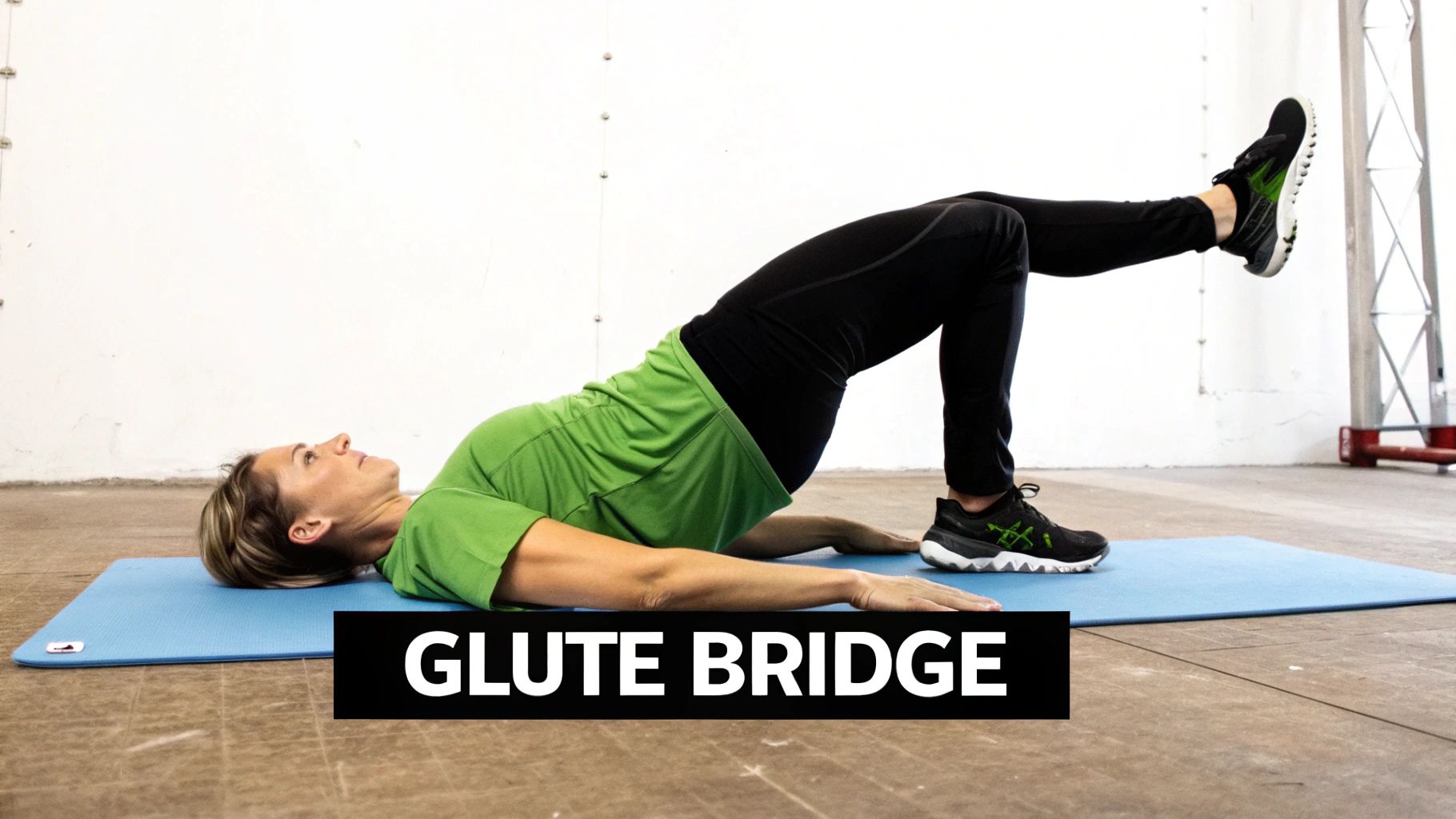
The Glute Bridge
Strong glutes are essential for taking the load off the lower back. This is one of the most effective glute strengthening exercises for sciatica relief because it stabilizes the pelvis.
- Starting Position: Lie on your back with knees bent and feet flat on the floor, hip-width apart.
- Action: Drive through your heels to lift your hips toward the ceiling. Squeeze your glutes at the top for two seconds.
- Common Mistake: Pushing too high and arching the lumbar spine. Stop when your body forms a straight line from knees to shoulders.
Lifestyle Adjustments for Sciatic Health
You can do all the sciatica relief exercises in the world, but if you spend eight hours a day in a slumped position, you are fighting an uphill battle. For the modern athlete and office worker, ergonomics and lifestyle choices are the "secret sauce" of rehabilitation.
First, address systemic inflammation. High sugar intake and excessive caffeine can heighten nerve sensitivity. Second, consider your workstation. If you are looking for sciatica relief exercises for office workers, start with "micro-breaks." Every 30 minutes, stand up and perform three standing back extensions (the standing version of the McKenzie press-up). This helps reverse the constant flexion of sitting.
Walking is also a powerful tool. It provides a low-impact mobilization of the sciatic nerve and promotes blood flow to the spinal discs. Aim for several short, 10-minute walks throughout the day rather than one long trek, which might fatigue your stabilizing muscles and lead to poor form.

FAQ
What are the best exercises for immediate sciatica relief?
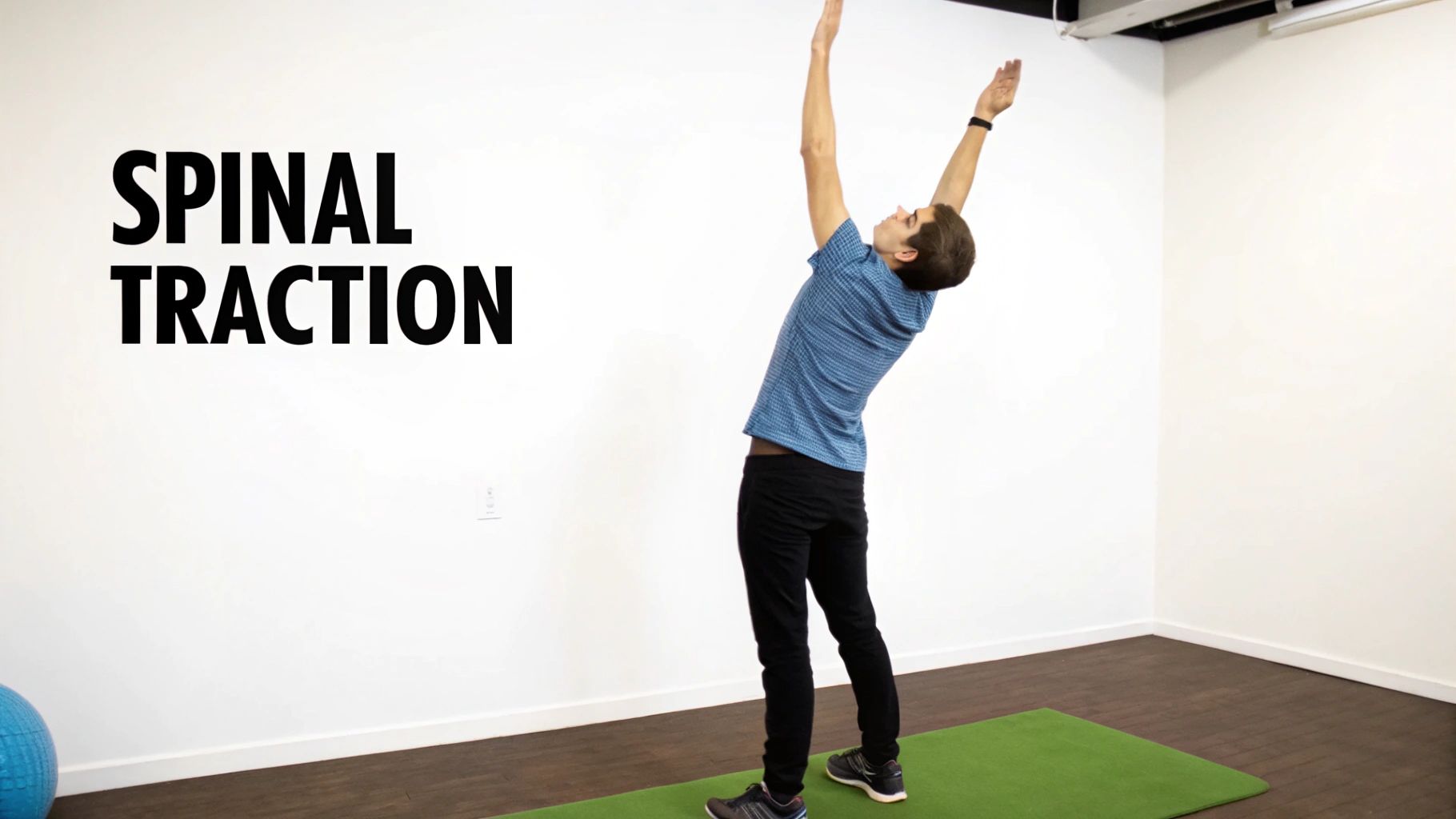
The most effective movement for immediate relief is usually the McKenzie Prone Press-up or a simple spinal decompression move like hanging from a pull-up bar (if tolerated). These movements help reduce the mechanical pressure on the nerve root. Additionally, seated nerve flossing can often provide quick relief by desensitizing the nerve through gentle movement.
How long does it take for sciatica exercises to start working?
While some people feel a reduction in pain centralization within the first few sessions, a full recovery typically takes 6 to 12 weeks. Consistency is key. Scientific data shows that the vast majority of patients see significant improvement within several weeks of conservative management, provided they perform their routines daily.
What exercises should you avoid if you have sciatica?
Avoid heavy lifting that involves spinal flexion, such as traditional deadlifts or weighted squats, during a flare-up. You should also stay away from "straight leg" hamstring stretches, as these put the sciatic nerve under intense tension rather than gliding it. High-impact activities like running or jumping should be paused until the pain has centralized to the lower back.
Is walking good for sciatica nerve pain?
Yes, walking is highly recommended as a low-impact mobilization tool. It helps keep the tissues hydrated and the nerve moving through the canal. However, you should avoid walking on uneven terrain or for distances that cause your leg pain to increase or travel further down the limb.
Can stretching make sciatica pain worse?
Absolutely. If you attempt to "stretch out" the pain by pulling on a nerve that is already inflamed and compressed, you can increase the inflammation and worsen the radiculopathy. This is why we prioritize nerve flossing—which glides the nerve—over static muscle stretching in the early stages of recovery.
How often should I do exercises for sciatica?
For the best results, perform your prescribed sciatica relief exercises 2 to 3 times per day. In the acute phase, shorter and more frequent sessions (5–10 minutes) are better than one long, exhausting session. As you move into the strengthening phase, you can transition to a more traditional 3-to-4-day-a-week training schedule.